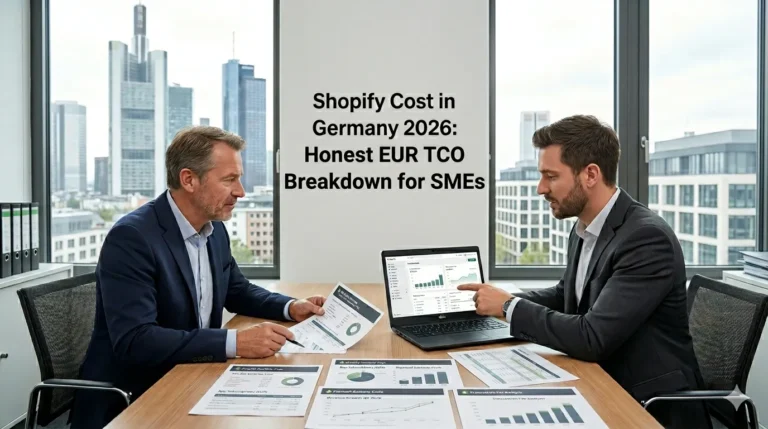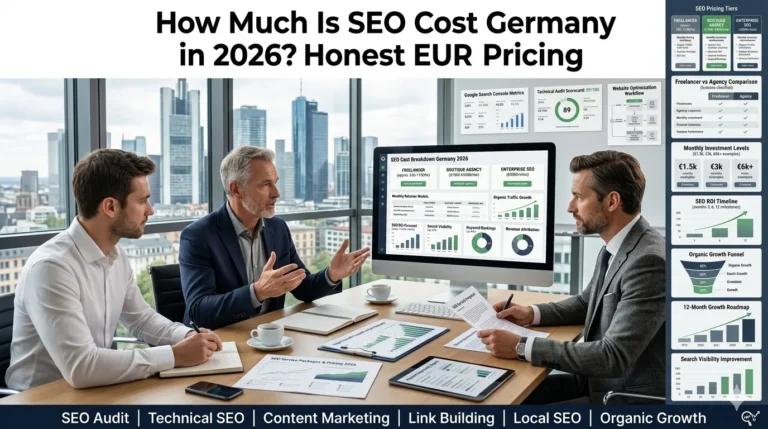
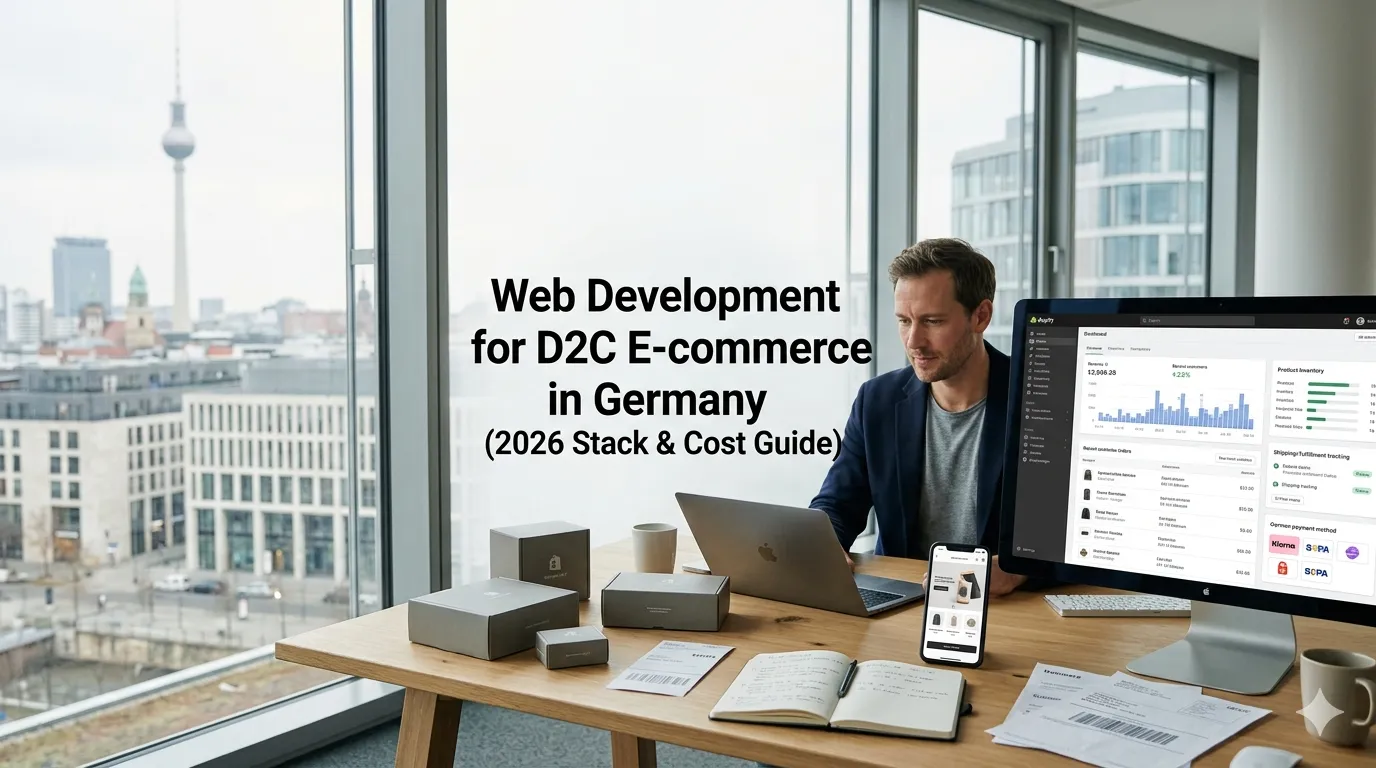
D2C (direct-to-consumer) e-commerce in Germany in 2026 is a specific kind of build challenge. The German online shopper expects: SEPA Lastschrift, Rechnung (invoice payment) for higher-trust purchases, German legal pages done correctly, fast pages on mobile, and a checkout that respects Widerrufsrecht (right of withdrawal). Get those wrong and conversion suffers — get them right and you can compete with global brands inside the German market with surprisingly modest infrastructure.
This guide walks through what web development for D2C e-commerce in Germany actually looks like in 2026: platform comparison (Shopify, WooCommerce, Shopware, custom), realistic EUR build costs, the German-specific build essentials, and what separates German D2C brands that compound from those that stall.
What’s specific about D2C e-commerce in Germany in 2026?
Five differences from US D2C that matter for the build:
Payment mix
German shoppers want: SEPA Lastschrift, Rechnung (invoice/pay later), Sofort/Giropay-style instant bank transfers, PayPal, Klarna (Sofort, Rechnung, Ratenkauf), credit cards. Card-only checkout is a conversion killer.
Legal pages and disclosures
Impressum, Datenschutzerklärung, AGB, Widerrufsbelehrung. Each must be linked from checkout. Wrong wording invites Abmahnungen.
Invoice compliance (GoBD)
Sequential invoice numbers, full company address, VAT breakdown, USt-ID, reverse-charge for B2B EU sales. Plugins like Germanized for WooCommerce or compliant Shopify apps handle this — but verify outputs with a Steuerberater.
Widerrufsrecht (14-day right of withdrawal)
For physical goods, 14 days from delivery. For digital goods, customer must waive explicitly. The wording matters; templates from IHK or Trusted Shops are starting points.
DSGVO + TTDSG cookie banner
Cookie consent before analytics, marketing, ad tracking. Most D2C sites collect Meta Pixel, Google Ads, Klaviyo. All must be consent-gated. See our cookie banner compliance guide.
What platform should a German D2C brand pick in 2026?
Five options dominate.
Shopify (and Shopify Plus)
The default for fast-growing D2C brands. Strong German app ecosystem (Sendcloud, Billbee, JTL, Sevdesk connectors), Shopify Payments + SEPA, easy theme customization.
Pros: fast to launch, low ops, great app marketplace, mobile-fast, scales to enterprise. Cons: monthly fee + transaction fees, German invoicing requires app stack, less customization without dev work. Best for: most D2C brands targeting €100k–€20M+ annual revenue.
WooCommerce (WordPress)
The flexibility leader. Free core plugin, paid extensions, full control over hosting.
Pros: maximum flexibility, lowest licensing cost, deep integration with WordPress content, owns the data. Cons: maintenance burden, performance requires care, German legal compliance requires plugins (Germanized). Best for: content-led brands, brands with German agencies already on WordPress.
Shopware (German native)
Made in Germany (Schöppingen). Strong for German B2B + Mittelstand e-commerce.
Pros: native German invoicing, deep B2B features (tiered pricing, customer-specific catalogs), German Steuerberater integration. Cons: smaller dev pool than Shopify/WooCommerce, learning curve. Best for: B2B-heavy, B2B + B2C mix, Mittelstand brands.
Custom (Next.js Commerce, Medusa, Saleor, Commerce.js)
For brands needing unique commerce experiences.
Pros: complete design freedom, modern stack. Cons: much higher build and maintenance cost. Best for: brands with €5M+ revenue and unique commerce requirements.
Headless commerce (Shopify Hydrogen, BigCommerce headless, commercetools)
WordPress / Next.js / custom frontend backed by a commerce engine.
Pros: best-of-both — fast modern frontend + proven commerce backend. Cons: more vendors, more complexity. Best for: content + commerce hybrids, marketing-heavy brands.
For 80% of German D2C brands launching in 2026, Shopify or WooCommerce is the right choice. Shopware for B2B-heavy. Custom for distinct scale + budget.
What does D2C e-commerce build cost in Germany in 2026?
Shopify build
- DIY launch: €500–€2,500 (apps, theme, time)
- German agency starter (theme + integrations + apps configured): €5,000–€18,000
- Mid-range Shopify build (custom theme, deep integrations, B2B features): €18,000–€60,000
- Shopify Plus + custom enterprise: €60,000–€300,000+
WooCommerce build
- DIY: €500–€2,500
- German agency starter (Germanized + theme + payment integration): €6,000–€22,000
- Mid-range custom: €22,000–€75,000
- Enterprise WooCommerce: €75,000–€350,000+
Shopware build
- Starter: €10,000–€35,000
- Mid-range B2B build: €35,000–€140,000
- Enterprise: €140,000–€700,000+
Headless or custom commerce
- Custom modern stack: €60,000–€300,000+
- Enterprise headless: €200,000–€1,500,000+
For broader context see our web development cost in Germany guide.
What German-specific integrations does a D2C store actually need?
Eight integrations matter for most German D2C brands:
Payments
Stripe + SEPA Lastschrift, Mollie, PayPal Plus (with Rechnung/Ratenkauf via PayPal), Klarna (Sofort, Rechnung, Ratenkauf). See our Stripe SEPA payment integration guide.
Shipping
DHL Geschäftskundenversand, DPD, Hermes, GLS. Integration via Sendcloud, Shipcloud, or platform-native shipping apps.
Accounting / invoicing
Lexware Lexoffice, sevDesk, FastBill, BuchhaltungsButler. Orders flow as invoices; payments flow back as paid status. GoBD-compliant invoice generation.
Inventory / warehouse
JTL-Wawi (dominant in German mid-market), Pickware, Plentymarkets for multi-channel. Easybill for invoicing-only flows.
Email + marketing automation
Klaviyo, Brevo (formerly Sendinblue), ActiveCampaign, rapidmail (German, DSGVO-strong), CleverReach.
Customer support
Zendesk, Freshdesk, Help Scout. Userlike or Crisp for chat. See our live chat for German websites guide.
Reviews and social proof
Trusted Shops (Germany-leading, dispute mediation included), Trustpilot, Judge.me, Yotpo.
Analytics
Plausible (EU-hosted, no consent gate), Matomo self-hosted, Shopify Analytics, GA4 with proper DSGVO consent flow.
What does German D2C UX get right vs. wrong?
After auditing dozens of German D2C launches, common patterns:
Getting right
- Versandkosten and lieferzeit visible on the product page (not buried in checkout)
- Multiple clear payment options including Rechnung and SEPA
- Star ratings with verified review badge (Trusted Shops)
- Clear Widerrufsrecht link from checkout
- German-language product descriptions (not auto-translated)
Getting wrong
- Hidden Versandkosten until checkout (legal violation under §312j BGB)
- US-style pop-up shopping cart preview that breaks consent gating
- Cookie banner before Impressum is loadable (DSGVO violation)
- “Buy now” CTAs without payment method preview
- English-only customer support
How does DSGVO shape D2C e-commerce?
Five DSGVO architectural decisions:
EU hosting
For order data, customer accounts, payment metadata. Hetzner, Mittwald, Raidboxes, IONOS, AWS Frankfurt.
Sub-processor management
Every third-party tool processing order/customer data is a sub-processor. Document and disclose in Datenschutzerklärung.
Consent-gated marketing pixels
Meta Pixel, Google Ads conversion tracking, Klaviyo identify — all load only after consent.
Data export and erasure
Customer-account-level data export. Order data retention separate (10-year GoBD requirement) — pseudonymize after retention period.
Cookie banner
See our cookie banner compliance guide.
What are the most common D2C build mistakes German brands make?
Four patterns:
Picking US-default checkout
Card-only, no SEPA, no Rechnung. Conversion suffers 20–40% vs. proper German payment mix.
Skipping Widerrufsbelehrung details
Wrong wording or missing waiver for digital goods. Refund disputes follow.
Underestimating shipping integration complexity
DHL Geschäftskundenversand, DPD, multi-warehouse, returns logistics. Each one is a project of its own.
Treating SEO as an afterthought
German D2C is competitive. Brand sites that launch without solid SEO foundations (proper internationalization, structured data, fast pages) take 2x longer to scale.
When should you consider a custom or headless build?
Most German D2C brands don’t need custom. Stay on Shopify or WooCommerce until:
- Revenue exceeds €5M/year
- Specific UX or merchandising needs that platforms can’t deliver
- Content + commerce hybrid where headless integration is genuinely valuable
- B2B complexity that exceeds Shopify or WooCommerce capability (then Shopware)
For more on build vs. buy decisions see our custom WordPress plugin development guide and headless WordPress with Next.js guide.
How does B2B mix change the platform decision?
Many German D2C brands grow into B2B (wholesale, distributors, B2B customers buying for resale). The platform decision changes:
- B2C-only: Shopify or WooCommerce works.
- B2C + light B2B: Shopify with B2B add-ons (Shopify B2B), or WooCommerce + B2B plugin.
- Significant B2B (>30% revenue): Shopware, BigCommerce B2B Edition, or custom WooCommerce + heavy B2B layer.
- B2B-dominant: Shopware or commercetools.
Plan for B2B from day one if it’s likely. Refactoring B2B onto a B2C platform later is painful.
Frequently Asked Questions About D2C Ecommerce Web Development in Germany
Shopify or WooCommerce for most brands; Shopware for B2B-heavy; custom/headless for €5M+ unique needs.
€5,000–€22,000 starter; €18,000–€75,000 mid-range; €10,000–€140,000+ Shopware; €75,000+ enterprise.
Yes — 30–50% of German payment volume; card-only loses 20–40% conversion.
Offer all three — Klarna for Rechnung, PayPal for trust, SEPA for recurring.
Customer must explicitly waive the 14-day right at checkout; document waiver version + timestamp.
Trusted Shops leads in Germany (legal review + mediation); Trustpilot for international reach.
Yes — Eastern Europe/Portugal excellent at 40–60% lower rates; verify DSGVO + German legal experience.
Germanized, eMagicOne, native Shopware; verify outputs with your Steuerberater before launch.
Need help scoping a D2C build?
If you’re planning a German D2C launch or replatform and want a 30-minute scoping conversation about platform choice, integrations, and realistic EUR budget, book a meeting or send details via our contact page.
Need expert help? Gem Programmers provides web design and development services for businesses in Germany, Austria and Switzerland. Request a free, no-obligation quote and get a clear plan with scope, timeline and price.