
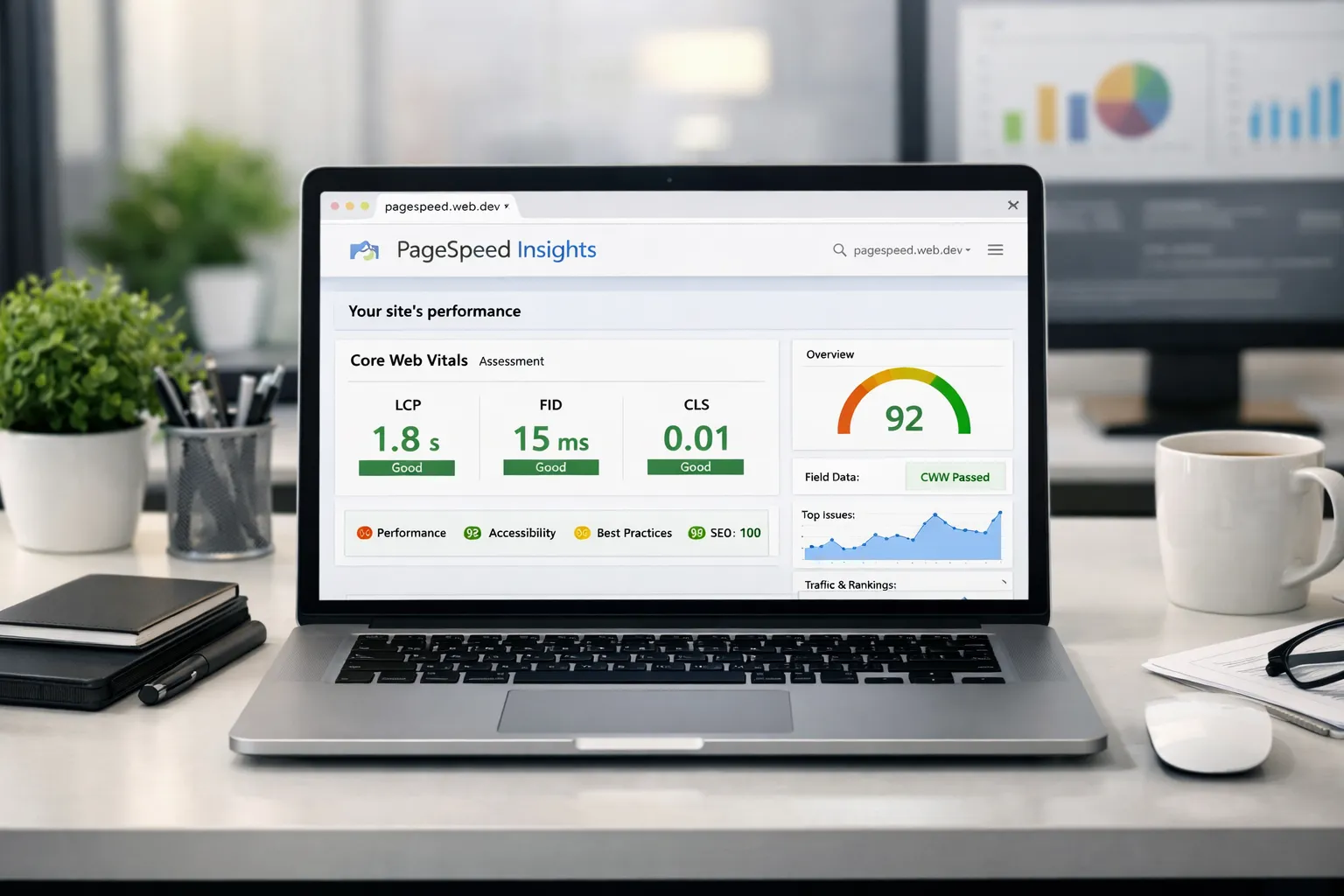
In today’s digital world, website speed SEO ranking is not optional. It is essential.
Google wants to deliver the best experience to users. If your website loads slowly, users leave. When users leave, rankings drop. When rankings drop, traffic and revenue fall.
That is why website speed SEO ranking is directly connected to:
- Core Web Vitals
- Performance metrics
- User experience (UX)
- Conversion rates
- Trust signals
If your goal is commercial growth, better leads, and stronger authority, you must understand how speed impacts Google rankings.
Let’s break it down step by step.
What Is Website Speed in SEO?
Website speed refers to how quickly your pages load and become usable.
From an SEO perspective, website speed SEO ranking depends on:
- Server response time
- Page load time
- Interactivity
- Visual stability
- Mobile performance
Google officially made speed a ranking factor years ago. Today, with Core Web Vitals, it has even more weight.
Speed is not just about “loading fast.” It is about performance and user experience together.
How Google Measures Website Speed
Google measures website speed using multiple tools and ranking signals.
The most important framework is:
Core Web Vitals
Core Web Vitals include:
- Largest Contentful Paint (LCP)
Measures loading performance.
Good score: under 2.5 seconds. - First Input Delay (FID) (being replaced by INP)
Measures responsiveness. - Cumulative Layout Shift (CLS)
Measures visual stability.
These performance metrics directly affect website speed and SEO ranking.
If your site fails Core Web Vitals, rankings can suffer.
Why Website Speed Impacts Google Ranking
Now let’s answer the big question:
1. Speed Improves User Experience (UX)
Google prioritizes user experience.
If your website takes 5+ seconds to load:
- Users bounce
- Pages per session drop
- Engagement declines
When engagement declines, Google sees it as a negative signal.
Better speed = better UX = better website speed SEO ranking.
2. Speed Reduces Bounce Rate
Slow websites frustrate users.
Imagine clicking a result and waiting… and waiting.
Most users leave within 3 seconds if the page doesn’t load.
High bounce rate tells Google:
“This page did not satisfy the user.”
That directly impacts rankings.
3. Speed Increases Crawl Efficiency
Search engines use bots to crawl your site.
If your website is slow:
- Bots crawl fewer pages
- Indexing slows down
- New content ranks more slowly
Fast websites allow better crawling and indexing.
This strengthens your overall website speed SEO ranking structure.
4. Mobile-First Indexing Makes Speed Critical

Google uses mobile-first indexing.
Mobile users are more sensitive to performance.
If your mobile site is slow:
- Rankings drop
- Conversions fall
- Trust decreases
Speed optimization is now mandatory for mobile SEO success.
5. Speed Impacts Conversion Rate
Speed is not just SEO.
It directly affects revenue.
Studies show:
- A 1-second delay reduces conversions
- Faster websites generate more sales
- Performance affects trust
When website speed SEO ranking improves, business growth follows.
Common Website Speed Problems (And Their SEO Impact)
Let’s identify major problems.
1. Large Unoptimized Images
High-resolution images without compression slow down pages dramatically.
Impact:
- Poor LCP score
- Slow mobile performance
- Higher bounce rate
2. Too Many Plugins or Scripts
Excessive JavaScript increases load time.
Impact:
- Delayed interactivity
- Poor responsiveness
- Lower website speed SEO ranking
3. Weak Hosting Server
Cheap hosting often means:
- Slow response time
- Server downtime
- Performance instability
Your server is the foundation of speed.
4. No Caching
Without caching:
- Every visit loads full resources
- Performance suffers
Caching improves repeat user experience significantly.
5. Poor Website Design Structure
Heavy animations, bad UX layouts, and cluttered design increase loading complexity.
Design directly impacts performance.
How to Improve Website Speed for Better SEO Ranking
Now let’s focus on solutions.
1. Optimize Images Properly
- Use WebP format
- Compress images
- Enable lazy loading
- Resize before uploading
This improves LCP and overall performance.
2. Minify CSS, HTML, and JavaScript
Remove:
- Extra spaces
- Comments
- Unused code
Minification reduces file size and improves website speed and SEO ranking.
3. Use a Content Delivery Network (CDN)
A CDN stores copies of your website globally.
Benefits:
- Faster international load times
- Reduced server load
- Better performance stability
4. Upgrade to High-Performance Hosting
Choose:
- SSD servers
- Optimized WordPress hosting
- Managed cloud solutions
Good hosting improves response time dramatically.
5. Enable Browser Caching
Caching stores static resources on user devices.
This improves:
- Repeat visits
- Page performance
- Overall experience
6. Improve Core Web Vitals
Use tools like:
- Google PageSpeed Insights
- Lighthouse
- Search Console reports
Focus specifically on:
- LCP
- CLS
- INP
Optimizing these directly improves website speed and SEO ranking.
Download the website speed impacts checklist
Website Speed, Trust & Brand Authority
Speed affects psychology.
Fast websites feel:
- Professional
- Secure
- Reliable
Slow websites feel:
- Outdated
- Unsafe
- Untrustworthy
Trust impacts conversions and SEO engagement signals.
Speed = trust = higher rankings.
UX, CTA & Design: Hidden Speed Factors
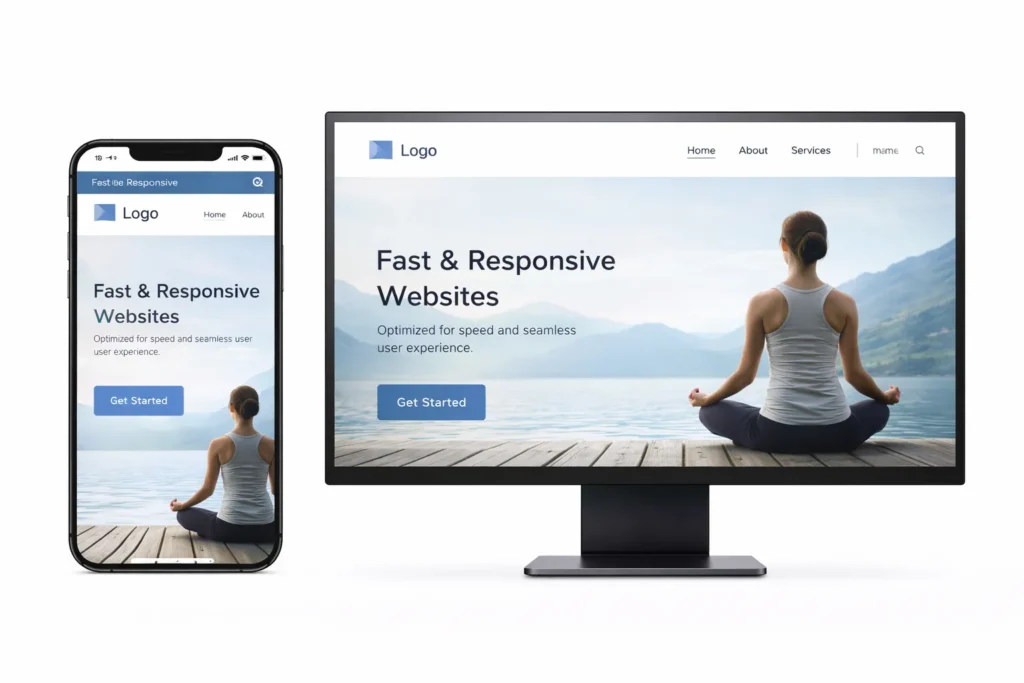
Website speed SEO ranking is not just technical.
It also connects with:
UX
- Clean layouts load faster
- Simplified design improves performance
- Clear structure reduces script complexity
CTA Optimization
Fast-loading CTAs increase:
- Click-through rates
- Lead submissions
- Conversion Rate Optimization
Slow CTAs reduce engagement.
Design Efficiency
Minimal design often outperforms heavy animations.
Modern SEO strategy balances:
- Performance
- Visual appeal
- Functionality
Website Speed SEO Ranking & Commercial Intent
Since your intent is commercial, understand this:
When users search:
- “Best SEO services”
- “SEO agency near me”
- “Professional SEO solutions”
They expect:
- Fast loading
- Smooth interaction
- Clear navigation
If your website is slow, you lose high-intent buyers.
That is why website speed SEO ranking is a revenue issue, not just a technical issue.
How Speed Impacts Your SEO Services Page
If you internally link to your SEO Services page:
- Faster speed increases dwell time
- Internal linking strengthens authority
- Performance improves crawl efficiency
Optimizing speed boosts your service page visibility directly.
Technical SEO + Speed Strategy
Professional SEO agencies combine:
- Technical audits
- Core Web Vitals analysis
- Server optimization
- Code cleanup
- UX improvements
Speed is part of advanced technical SEO.
It is not optional anymore.
Signs Your Website Has Speed Issues
You may have performance problems if:
- Pages load slower than 3 seconds
- Mobile experience feels laggy
- Bounce rate is high
- Core Web Vitals show “Poor.”
- Conversions are dropping
If these apply, your website’s SEO ranking is at risk.
Speed Optimization Checklist
Here is a quick, actionable checklist:
- Compress images
- Enable caching
- Use CDN
- Reduce scripts
- Upgrade hosting
- Improve Core Web Vitals
- Optimize mobile layout
- Remove unused plugins
- Simplify design
- Monitor performance monthly
Consistent monitoring protects your rankings.
Long-Term Benefits of Website Speed Optimization
When you optimize properly:
- Higher search rankings
- More organic traffic
- Better engagement
- Increased conversions
- Stronger brand trust
- Improved user satisfaction
Website speed SEO ranking is a long-term competitive advantage.
Conclusion
Website speed is no longer a small ranking factor.
It is a core SEO foundation.
If your site is slow, your rankings will struggle.
If your performance is optimized, Google rewards you.
Investing in speed improves:
- Core Web Vitals
- User experience
- Trust
- Conversion rate
- Revenue
If you are serious about SEO growth, technical performance must be your priority.
Speed is not just technical.
Speed is strategic.
Faqs
Yes. Google uses speed and Core Web Vitals as ranking factors. Slow websites can experience lower search visibility and reduced organic traffic.
Ideally under 2.5 seconds for Largest Contentful Paint. Faster is always better for user experience and SEO performance.
Core Web Vitals measure loading, responsiveness, and visual stability. Poor scores can negatively impact rankings.
Yes. Server response time directly impacts page speed, crawl efficiency, and overall performance metrics.
Yes. Google uses mobile-first indexing, so mobile performance strongly influences rankings.
Absolutely. Large, uncompressed images significantly slow down load time and harm SEO ranking.
At least once a month. Regular monitoring ensures performance issues are fixed before rankings drop.