
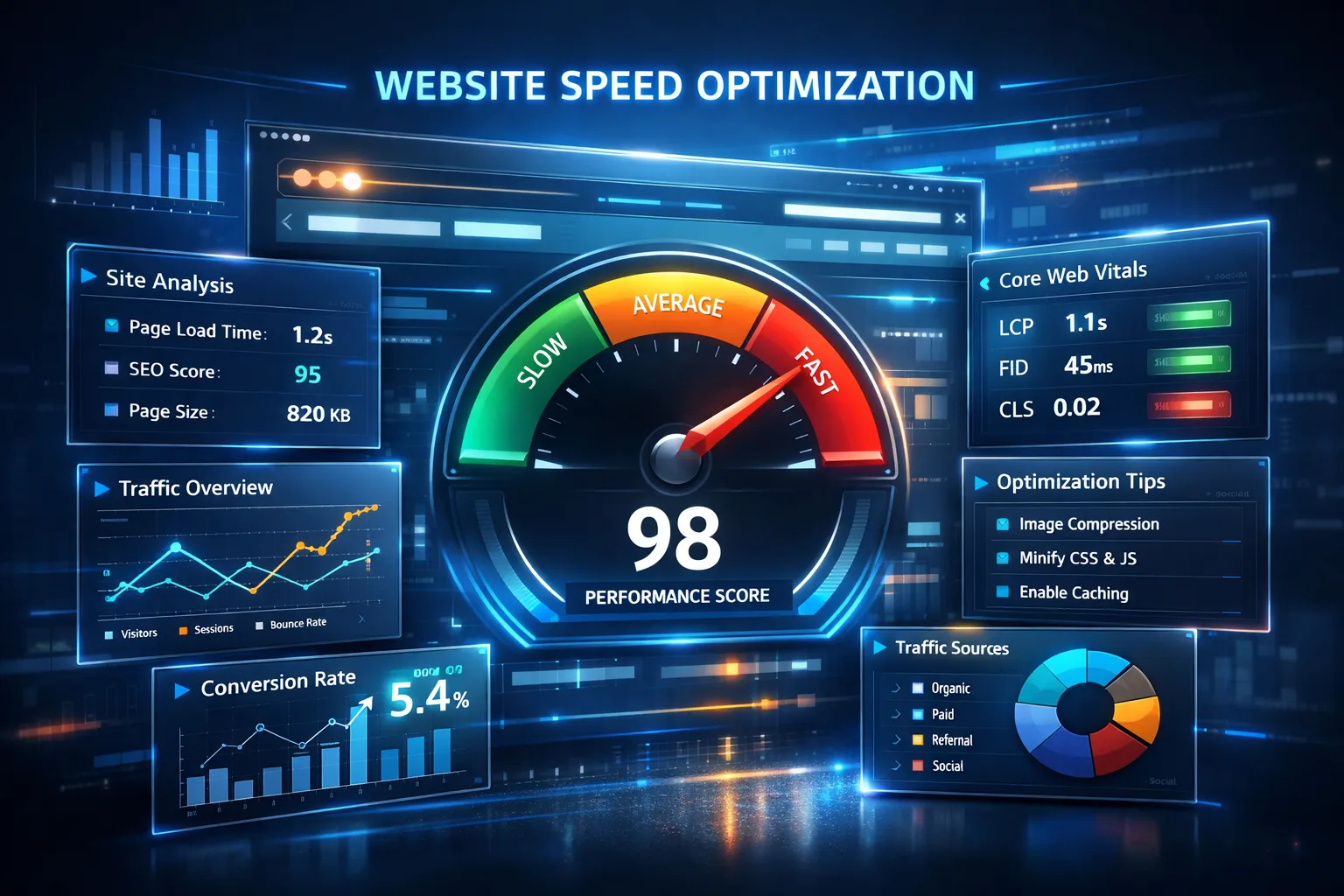
In today’s digital world, speed decides success.
Users no longer wait for slow websites. If your website takes more than a few seconds to load, visitors leave immediately. This means lost traffic, lost trust, and lost revenue.
A fast website for conversions is not just about technical performance. It directly affects how users interact with your brand, how long they stay on your website, and whether they buy your product or service.
Studies show that even a 1-second delay in website loading can reduce conversions by up to 20%. That means website speed is not just a technical factor. It is a major driver of business growth.
A fast website improves:
- User experience
- Customer trust
- SEO rankings
- Engagement time
- Conversion rates
Businesses that invest in website speed optimization consistently outperform competitors who ignore performance.
In this guide, we will explain:
- Why website speed affects sales
- How slow websites destroy conversions
- UX and design problems caused by slow websites
- How to build a fast website for conversions
Why Website Speed Matters for Online Businesses
Website speed is now a ranking factor, a UX factor, and a conversion factor.
Search engines and users both expect fast experiences.
When your website loads quickly:
Users stay longer.
Pages load smoothly.
Customers trust your brand.
But when your website loads slowly, users feel frustrated.
Slow websites create:
- High bounce rates
- Lower engagement
- Poor search rankings
- Lost sales opportunities
That is why modern businesses focus on building a fast website to drive conversions, not just a beautiful one.
Speed has become one of the most important performance indicators for online growth.
How Slow Websites Kill Sales
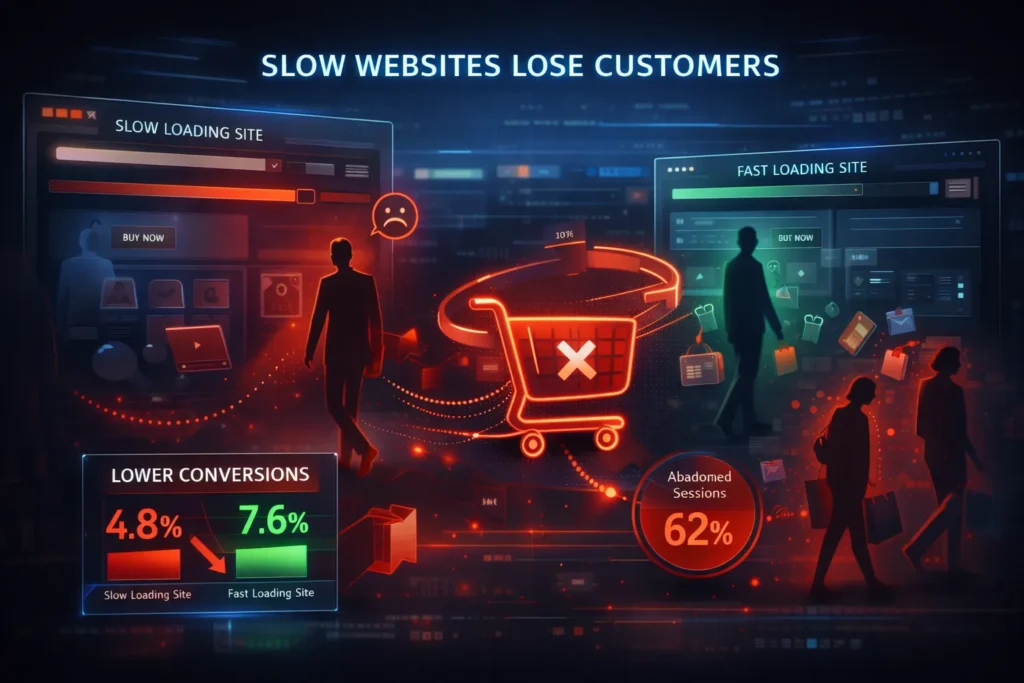
Many businesses invest thousands in marketing.
They run ads, publish blogs, and drive traffic to their websites.
But if the website is slow, all that traffic gets wasted.
Visitors abandon slow websites quickly.
Common problems caused by slow websites include:
- Customers leaving before the page loads
- Product pages are loading too slowly
- Checkout pages are failing to respond quickly
- Mobile users are experiencing delays
These issues reduce conversion opportunities.
A slow website can quietly destroy your sales funnel without you even noticing.
That is why smart companies prioritize building a fast website for conversions.
User Experience Problems Caused by Slow Websites
User experience plays a major role in conversion rate optimization
Website speed directly affects UX.
If a website loads slowly, the user experience becomes frustrating.
Some common UX problems caused by slow websites include:
Delayed Page Navigation
Users click a link, but the next page takes too long to load.
This breaks the browsing experience.
Broken Customer Journey
Customers move from product pages to checkout pages.
If any step takes too long, the customer abandons the process.
Mobile Frustration
Mobile users expect instant results.
Slow websites create a poor mobile experience.
Content Loading Issues
Images, text, and buttons may load slowly or appear broken.
This damages brand perception.
A fast website for conversions ensures smooth navigation and an enjoyable browsing experience.
The Relationship Between Website Speed and Conversions
Speed and conversions are deeply connected.
A fast website reduces friction in the customer journey.
Users can easily:
- Explore products
- Read content
- Click CTAs
- Complete purchases
Every second saved improves engagement.
When websites load faster, visitors feel more comfortable exploring your brand.
This increases the chances of turning visitors into customers.
Businesses that optimize speed often see:
- Higher conversion rates
- Longer session duration
- Lower bounce rates
- More returning visitors
That is why speed optimization is critical to building a fast website that drives conversions.
How Website Speed Builds Customer Trust
Trust is a powerful conversion factor.
When a website loads instantly, it conveys professionalism and reliability.
Slow websites create the opposite effect.
Users may think:
- The website is outdated
- The business is not professional
- The website might not be secure
A fast website communicates:
- professionalism
- reliability
- credibility
Customers trust businesses that provide a seamless online experience.
That is another reason companies invest in building a fast website to drive conversions.
How Website Speed Impacts SEO Rankings
Search engines care deeply about user experience.
Website speed is now a major ranking factor.
Search engines prioritize websites that load quickly because they deliver better experiences.
Slow websites struggle to rank in search results.
Speed affects:
- Core Web Vitals
- crawl efficiency
- indexing
- ranking signals
Faster websites help search engines crawl pages efficiently.
That means more pages get indexed and ranked.
A fast website for conversions improves both SEO traffic and sales potential.
Design Problems That Slow Down Websites
Poor design decisions cause many slow websites.
Some designers focus only on aesthetics without considering performance.
Common design mistakes include:
Heavy Images
Large images dramatically increase page load time.
Too Many Animations
Excessive animations slow page rendering.
Poor Layout Optimization
Unoptimized layouts increase server requests.
Large Video Backgrounds
Videos consume bandwidth and delay loading.
Smart developers balance design and performance to deliver a fast website that drives conversions.
CTA Optimization for Faster Conversions
Call-to-Action elements are critical for generating leads and sales.
But slow websites weaken CTA performance.
If buttons load slowly or appear late, users may leave before clicking.
A fast website ensures:
- CTAs load instantly
- buttons respond quickly
- forms submit smoothly
Effective CTA placement combined with speed optimization creates a powerful conversion system.
That is why businesses prioritize building a fast website for conversions.
Technical Factors That Affect Website Speed
Several technical factors influence website performance.
Understanding these factors helps businesses improve speed.
Key technical elements include:
Hosting Quality
Cheap hosting often results in slow load times.
Server Response Time
Slow servers delay website delivery.
Code Optimization
Unoptimized CSS and JavaScript increase load time.
Image Compression
Large images slow page rendering.
Caching Systems
Caching reduces server load and improves speed.
Developers optimize these elements to build a fast website for conversions.
Speed Optimization Strategies That Increase Sales
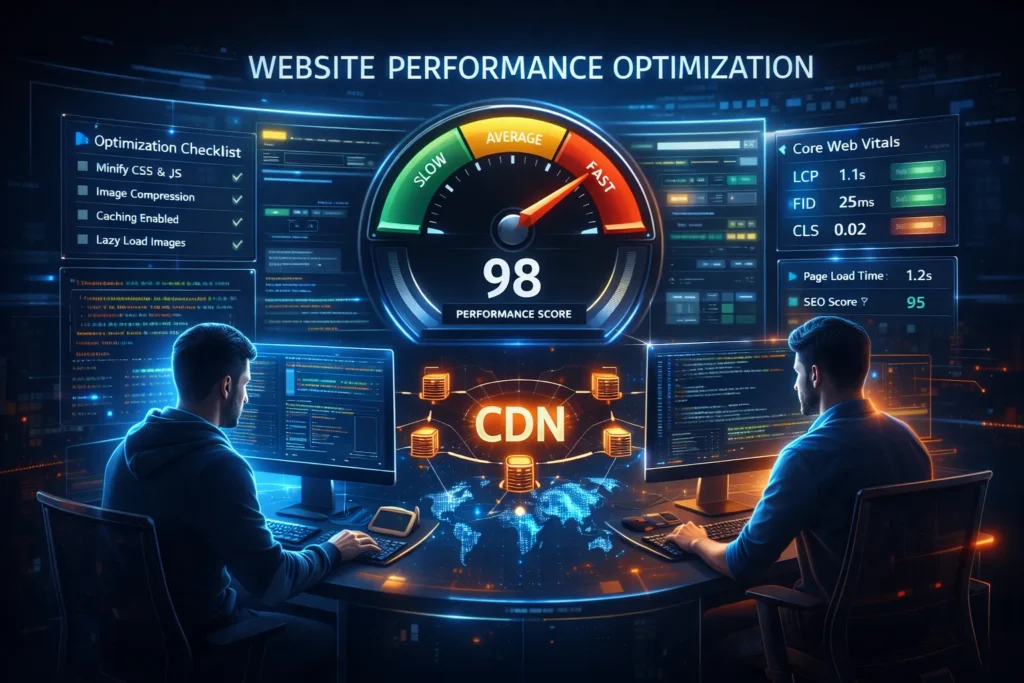
Businesses can dramatically improve website performance by implementing the right strategies.
Some of the most effective speed optimization methods include:
Image Optimization
Compress images without reducing quality.
CDN Integration
Content Delivery Networks distribute content globally to improve load times.
Code Minification
Reducing CSS and JavaScript file sizes improves speed.
Lazy Loading
Images load only when users scroll to them.
Database Optimization
Optimizing database queries improves performance.
These strategies help create a fast, high-conversion website that performs efficiently.
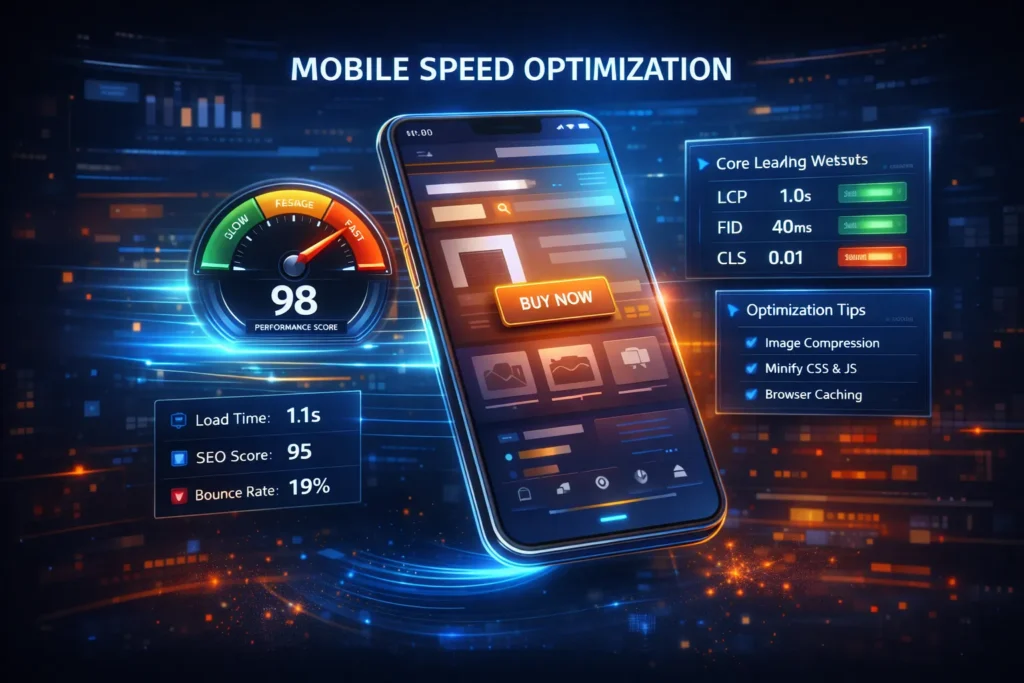
Mobile Speed Optimization
More than half of website traffic now comes from mobile devices.
Mobile users expect fast loading experiences.
Slow mobile websites cause major traffic loss.
Optimizing mobile speed involves:
- responsive design
- lightweight layouts
- compressed images
- reduced scripts
A mobile-optimized website is crucial for delivering a fast experience and driving conversions.
Why Businesses Must Invest in Website Speed
Website speed optimization is not an optional upgrade.
It is a critical investment in the growth of Digital Marketing.
A fast website improves:
- customer experience
- brand trust
- SEO visibility
- lead generation
- revenue growth
Businesses that ignore speed lose competitive advantage.
A fast website for conversions is one of the most powerful digital assets a company can build.
Conclusion
Website speed is no longer just a technical concern.
It directly affects how users interact with your business online.
Slow websites frustrate visitors, damage trust, and reduce sales opportunities.
Fast websites create seamless experiences that guide users smoothly through the customer journey.
When businesses invest in performance optimization, they gain a powerful competitive advantage.
A fast website for conversions improves SEO rankings, strengthens customer trust, and increases revenue potential.
In today’s competitive digital landscape, speed is not optional.
It is the foundation of successful online growth.
Faqs
Website speed improves user experience and reduces bounce rates. Faster websites allow users to navigate smoothly, increasing engagement and improving the chances of converting visitors into paying customers.
Most experts recommend a loading time of under three seconds. Websites that load faster deliver a better user experience and significantly improve search rankings and conversion rates.
Yes. Search engines consider page speed a ranking factor. Faster websites improve crawl efficiency, indexing, and overall visibility in search results.
Slow websites are usually caused by large images, unoptimized code, poor hosting, excessive scripts, and heavy design elements that increase loading time.
Yes. Faster websites improve user experience and reduce friction during browsing and checkout, significantly increasing sales and conversion rates.
Developers improve speed by optimizing images, using CDN services, minifying code, enabling caching, and improving server response time.
Yes. Mobile traffic dominates the internet today. Fast mobile websites provide better experiences, increase engagement, and improve conversions.