

Why Brand Authority Matters More Than Ever
In today’s digital world, customers do not trust easily. They have too many options, too many ads, and too many brands trying to sell something. Because of this, people have become more careful about where they spend their money.
Brand authority is what separates a trusted business from a random one. It is not just about having a website or running ads. It is about how people feel when they interact with your brand online.
When someone visits your website, checks your social media, or reads your content, they are silently judging your business. Within seconds, they decide whether you are professional, trustworthy, and worth their time.
If your digital presence is weak, users leave. If it is strong, they stay, explore, and eventually convert.
This is where digital marketing plays a powerful role. It helps shape perception, build trust, and position your brand as an authority in your industry.
What Happens When Your Brand Lacks Authority?
Many businesses invest in websites and ads but still fail to grow. The main reason is not traffic — it is trust.
When your brand lacks authority, users feel uncertain. They hesitate to take action, even if your product or service is good.
Some common problems include:
- Visitors leaving your website quickly
- Low conversion rates despite good traffic
- Lack of engagement on social platforms
- Difficulty in generating leads
- Weak brand recognition
These issues are not random. There are signs that users do not fully trust your brand.
Without authority, even the best marketing strategies struggle to deliver results.
How Digital Marketing Changes Everything
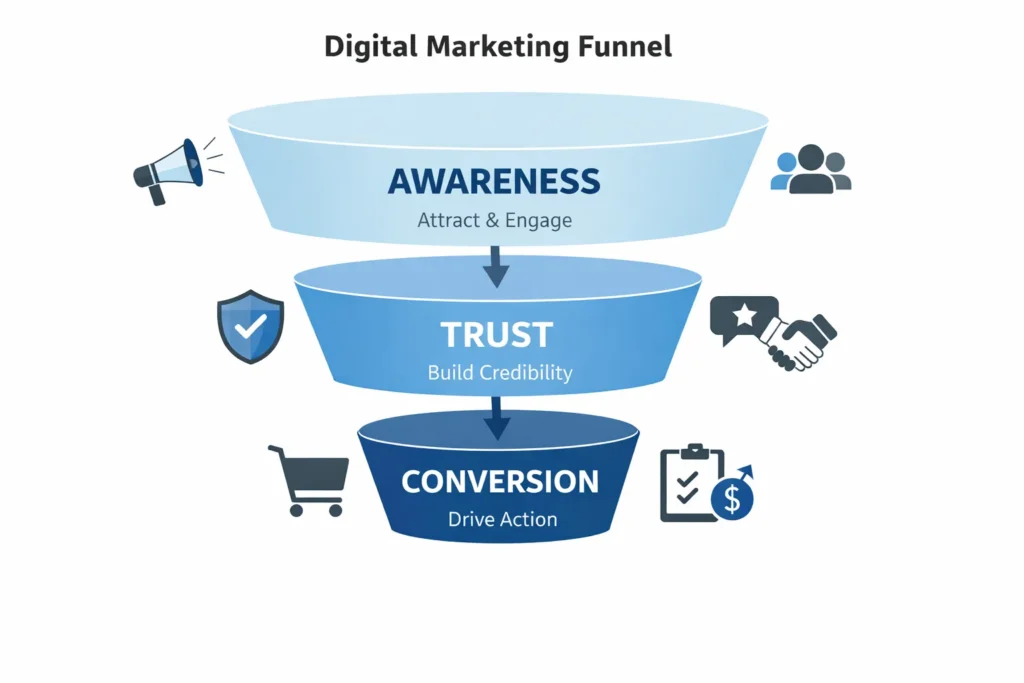
Digital marketing is not just about promoting your business. It is about building a complete experience that earns user trust at every step.
From the moment someone discovers your brand to the point where they become a customer, every interaction matters. Your website design, content, messaging, and overall presentation work together to create a perception.
When done correctly, digital marketing transforms your brand into something people recognize, trust, and prefer.
It creates consistency. It builds credibility. And most importantly, it reduces doubt in the customer’s mind.
Website Design: Your First Authority Signal
Your website is often the first point of contact between your brand and your audience. It acts as your digital office, and just like a physical space, its appearance matters a lot.
If your website looks outdated, cluttered, or confusing, users immediately question your professionalism. On the other hand, a clean and modern design creates a sense of confidence.
A strong website design focuses on clarity and simplicity. It guides users naturally without overwhelming them. Every section has a purpose, and every element supports the user journey.
Key elements that improve authority include:
- Clean and structured layout
- Consistent color scheme and branding
- Mobile-friendly design
- Fast loading speed
- Clear navigation
When users feel comfortable browsing your website, they are more likely to trust your brand and stay longer.
User Experience (UX): Turning Visitors into Believers
User experience goes beyond design. It is about how smoothly users can interact with your website.
A good UX removes friction. It makes everything easy, intuitive, and fast.
When users struggle to find information, fill out forms, or navigate pages, they lose trust. Frustration quickly turns into exit.
But when the experience is smooth, users feel confident. They believe your business is reliable and professional.
A strong UX includes:
- Simple navigation structure
- Easy-to-read content layout
- Fast page speed
- Clear call-to-action placement
- Minimal distractions
Good UX does not just improve usability. It directly impacts how users perceive your brand.
Content Marketing: Building Expertise and Authority
Content is one of the most powerful tools in digital marketing. It allows you to educate, inform, and connect with your audience.
When you consistently share valuable content, you position your brand as an expert. Instead of just selling, you start helping people solve problems.
This shift changes everything. Users begin to trust your knowledge, and that trust turns into authority.
Effective content marketing includes:
- Blog articles that answer real questions
- Guides that provide step-by-step solutions
- Case studies that show real results
- Informational pages that build clarity
The more helpful your content is, the stronger your authority becomes.
SEO: The Trust Signal You Cannot Ignore
Search engine visibility plays a major role in brand perception. When your website appears on the first page of search results, users automatically see you as more credible.
This is because people trust search engines to show the best results.
SEO helps your brand get discovered by the right audience. It also builds long-term authority by increasing your online presence.
A strong SEO strategy focuses on:
- Keyword optimization
- High-quality content
- Technical performance
- Backlinks and credibility
As your rankings improve, your brand becomes more visible and more trusted.
Social Proof: The Shortcut to Instant Trust
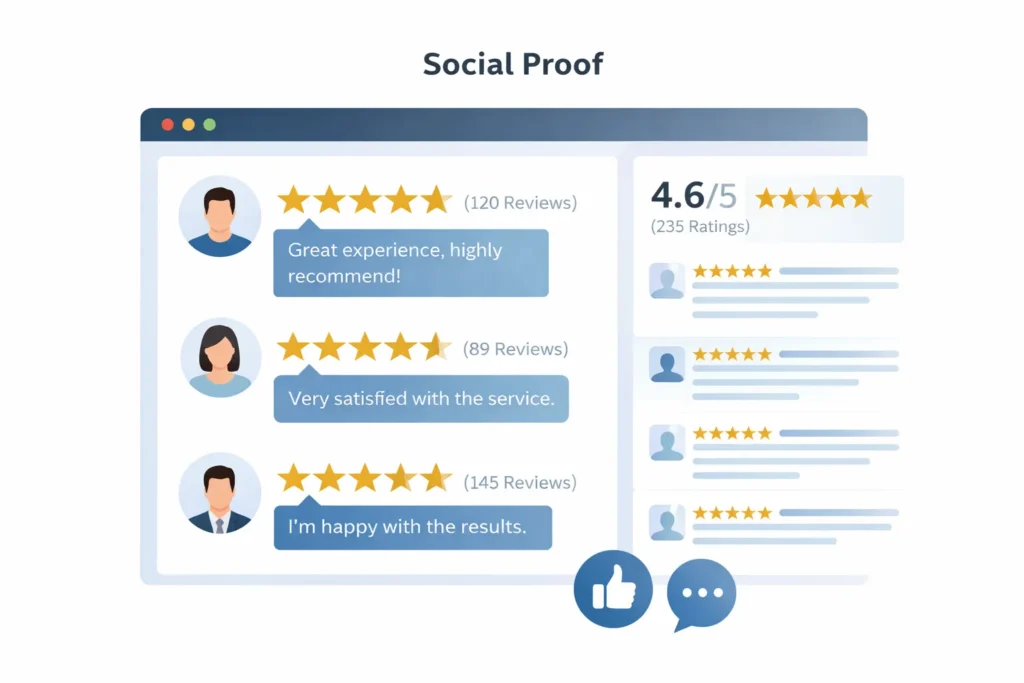
People trust other people more than brands. This is why social proof is so powerful.
When users see positive reviews, testimonials, or real customer experiences, their doubts start to disappear.
Social proof acts as validation. It shows that others have already trusted your brand and had a good experience.
Examples of strong social proof include:
- Customer reviews
- Star ratings
- Video testimonials
- Case studies
- Client logos
Adding these elements to your website can significantly boost your credibility.
Call-To-Actions (CTAs): Guiding Users with Confidence
A call-to-action is more than just a button. It is a direction.
It tells users what to do next and helps them move forward in their journey.
Weak CTAs create confusion. Strong CTAs create clarity.
Instead of using generic phrases, effective CTAs focus on value and outcomes. They make users feel confident about taking action.
For example, instead of saying “Submit,” a better approach is to say something that highlights the benefit.
Strong CTAs improve conversions, and higher conversions reinforce brand authority.
Social Media Presence: Building Visibility and Connection
Social media is often the second place users check after visiting your website. It helps them understand your brand personality and activity level.
An inactive or poorly managed social profile can damage your credibility. On the other hand, an active and engaging presence builds trust.
When you consistently share content, respond to users, and show real interactions, your brand feels more human and approachable.
This connection plays a big role in building long-term authority.
Trust Signals: Reducing Risk for Users
Online users are always cautious. They want to feel safe before making a decision.
Trust signals help reduce this fear. They show that your website is secure and your business is legitimate.
Important trust signals include:
- SSL certificates
- Secure payment icons
- Privacy policies
- Guarantees or warranties
- Clear contact information
These elements may seem small, but they have a big impact on user confidence.
Data-Driven Marketing: Strengthening Authority Over Time
One of the biggest advantages of digital marketing is data. You can track user behavior, measure performance, and continuously improve your strategy.
This allows you to understand what works and what does not.
When you optimize your website and campaigns based on real data, your brand becomes more effective and more reliable.
Over time, this consistency builds strong authority.
Why Many Brands Still Struggle
Even with access to digital marketing tools, many businesses fail to build authority.
The reason is simple. They focus on short-term results instead of long-term trust.
Common mistakes include:
- Ignoring website design
- Poor user experience
- Inconsistent branding
- Weak content strategy
- Lack of trust signals
Fixing these issues requires a strategic approach, not random efforts.
A Simple Framework to Build Brand Authority
To build strong authority, you need a structured plan.
Start with your website. Make sure it looks professional and is easy to use. Then focus on creating valuable content that solves real problems.
Improve your SEO to increase visibility. Add social proof to build trust. Use strong CTAs to guide users.
Finally, stay consistent. Authority is not built overnight. It grows with time and effort.
Real Impact of Strong Brand Authority
When your brand has authority, everything becomes easier.
Users trust you faster. They spend more time on your website. They engage with your content and respond to your offers.
This leads to better results across all areas of your business.
You will notice:
- Higher conversion rates
- Better customer retention
- Stronger brand recognition
- Increased revenue
Most importantly, your business becomes a preferred choice instead of just another option.
Conclusion
Digital marketing is not just about visibility. It is about perception.
Every element, from design to content, plays a role in shaping how users see your brand.
When your digital presence is strong, users feel confident. They trust your business and are more willing to take action.
Building brand authority takes time, but the results are worth it.
Because in the end, trust is what drives growth.
Faqs
Brand authority is the level of trust and credibility your business has online based on content, design, user experience, and overall digital presence.
It helps users trust your business, increases conversions, and improves long-term customer relationships.
It uses SEO, content, UX, and trust signals to create a strong and reliable brand image.
A clean and modern website creates a strong first impression and builds instant trust with users.
Yes, high-quality content positions your brand as an expert and increases user trust.
It usually takes a few months of consistent effort to see strong results.
Using social proof, strong design, and clear messaging can quickly improve user confidence.