
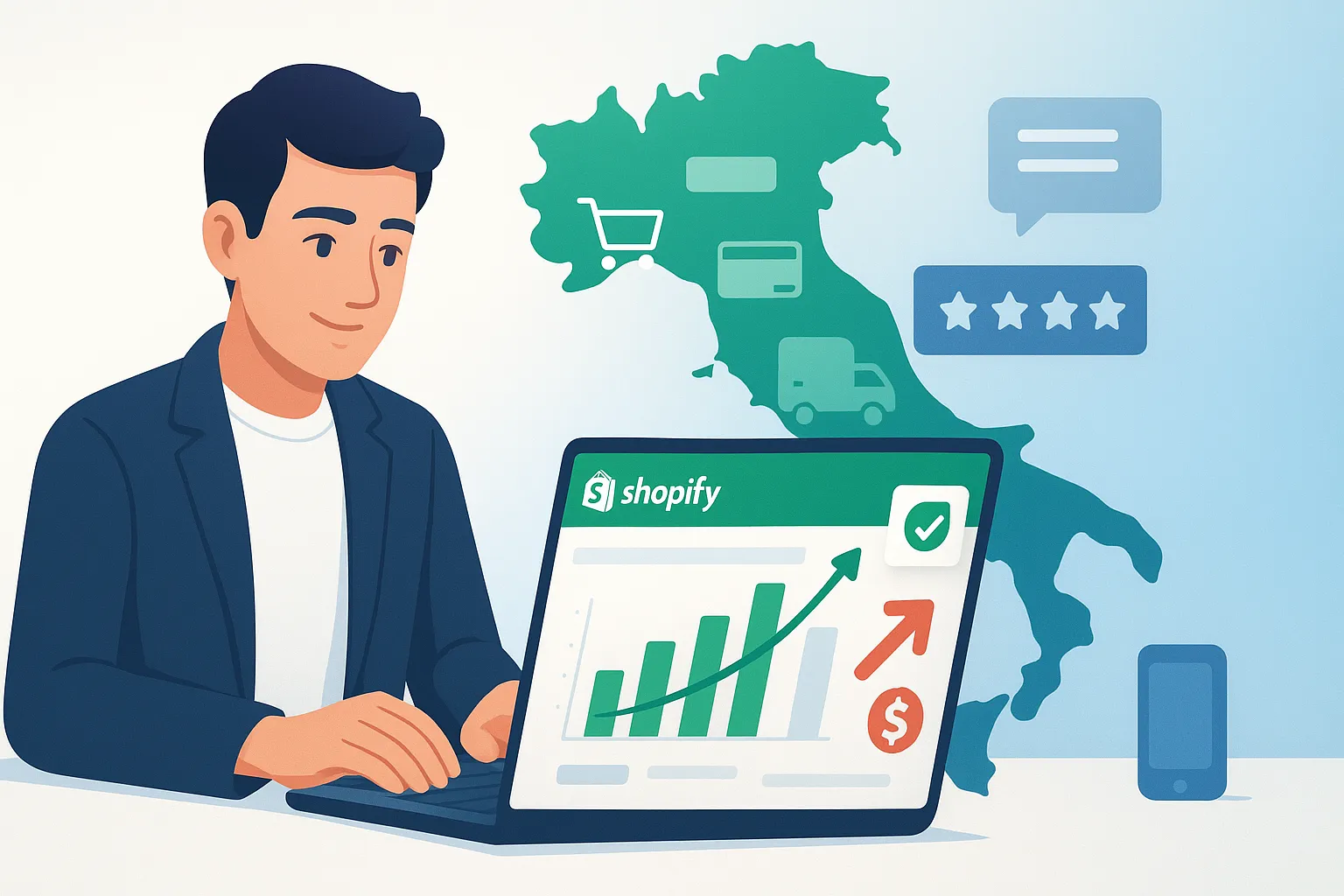
Italian e-commerce is booming, with online sales expected to reach €54 billion in 2026. But here’s the reality: Italian Shopify apps for growth stores using strategic apps grow 3x faster than those running on default features alone.
The difference between a struggling store and a thriving one often comes down to the right technology stack. This comprehensive guide reveals the exact apps that drive measurable growth for Italian Shopify merchants—from your first Business Sales to scaling past €100,000 per month.
Why Apps Matter for Italian E-commerce Growth
The Italian E-commerce Landscape 2026
Italian consumers have unique shopping behaviors that smart merchants leverage:
- Mobile-first shopping: 67% of Italian online purchases happen on mobile devices
- Trust-driven decisions: 88% of Italian shoppers read reviews before purchasing
- Local payment preferences: Satispay, Scalapay, and traditional bank transfers remain popular
- Relationship-focused: Italian consumers value personalized communication and customer service
The App Multiplier Effect
Apps don’t just add features—they create compounding growth effects:
Example: An Italian fashion boutique installed 5 strategic apps:
- Email marketing (Klaviyo): +35% revenue from automated campaigns
- Reviews (Judge.me): +42% conversion rate increase
- Loyalty program (BON Loyalty): +67% repeat purchase rate
- Page builder (PageFly): +28% landing page conversions
- Analytics (Triple Whale): Identified €12,000 in wasted ad spend
Total investment: €180/month in apps
Additional monthly revenue: €9,000+
ROI: 4,900%
How Apps Fuel Your Growth Engine
VISITOR → CONVERSION → RETENTION → ADVOCACY
↓ ↓ ↓ ↓
Live Chat Reviews Loyalty Referrals
SEO/Speed Upsells Email Reviews
Popups FOMO SMS Social Proof
Foundation Apps: Install These First
1. Email Marketing & SMS Automation
Why Essential: Email marketing delivers an average €42 return for every €1 spent. For Italian stores, it’s the most cost-effective growth channel.
Top Pick: Klaviyo
Best for: Growing stores (€1,000+ monthly revenue)
Key Features:
- Advanced segmentation for Italian customer behaviors
- Pre-built flows (welcome series, abandoned cart, post-purchase)
- SMS marketing integrated with email
- Revenue tracking per campaign
- Native Italian language support
Pricing: Free up to 500 contacts, then from €45/month
Italian-Specific Setup:
- Create a welcome series highlighting “Consegna gratuita” (free shipping)
- Time abandoned cart emails for 1 hour, 24 hours, 72 hours (optimal for Italian shoppers)
- Birthday campaigns with “Buon compleanno” messaging
- Post-purchase review requests in Italian after 10-14 days
Expected ROI: 3,800% average for Klaviyo users
Budget Alternative: Omnisend
Best for: Small to medium stores
Key Features:
- Email + SMS + web push in one platform
- More affordable than Klaviyo
- Excellent pre-built automation templates
- Product picker for visual campaigns
- Shopify apps for growth: POS integration
Pricing: Free up to 500 contacts, then from €16/month
Why Choose This: If budget is tight but you need professional automation, Omnisend offers 80% of Klaviyo’s features at 35% of the cost.
For Beginners: Privy
Best for: New store building email lists
Key Features:
- Popup builder for email capture
- Spin-to-win gamification
- Abandoned cart emails
- Basic segmentation
- Easy setup (15 minutes)
Pricing: Free up to 100 contacts, then from €30/month
SMS Specialist: Postscript
Best for: Stores with strong customer relationships
Key Features:
- SMS-focused platform
- Conversational texting (two-way communication)
- Compliance with Italian GDPR rules
- Automated text flows
- Keyword campaigns
Pricing: From €25/month + message fees
Italian Consideration: SMS works exceptionally well in Italy for urgent promotions and shipping updates. Italians have high SMS open rates (98% vs 20% for email).
Email Marketing Comparison Table
| App | Free Plan | Paid From | Subscribers | SMS | Italian Support | Best For | Rating |
| Klaviyo | 500 contacts | €45/mo | Unlimited | ✓ | ✓ | Large stores | 4.7/5 |
| Omnisend | 500 contacts | €16/mo | 500+ | ✓ | ✓ | Growing stores | 4.6/5 |
| Privy | 100 contacts | €30/mo | 2,000+ | ✗ | ✓ | Beginners | 4.6/5 |
| Postscript | ✗ | €25/mo | Unlimited | ✓ | ✓ | SMS focus | 4.8/5 |
2. Localization & Italian Compliance
Langify or Weglot
Why Essential: 74% of Italian consumers prefer shopping in their native language.
Langify (€17.50/month)
- Manual translations (full control)
- Unlimited languages
- SEO-friendly (separate URLs per language)
- Best for: Stores with translation resources
Weglot (from €10/month)
- Automatic translations
- Visual editor for refinements
- Fast setup (10 minutes)
- Best for: Quick multilingual launch
Italian Setup Priority:
- Product descriptions
- Checkout process
- Email notifications
- Customer service responses
- Return policy
Fatturazione Elettronica (Electronic Invoicing)
Required by Italian law for B2B and some B2C transactions.
Recommended Apps:
- Fattura24 – Automated Italian invoice generation
- Italian Invoice & Receipt – Compliance with “Fattura Elettronica”
- Sufio – Professional invoices with Italian format
Key Features Needed:
- Codice Fiscale field collection
- Partita IVA validation
- SDI code handling
- Automatic invoice generation
- XML format compliance
3. Italian Payment Methods
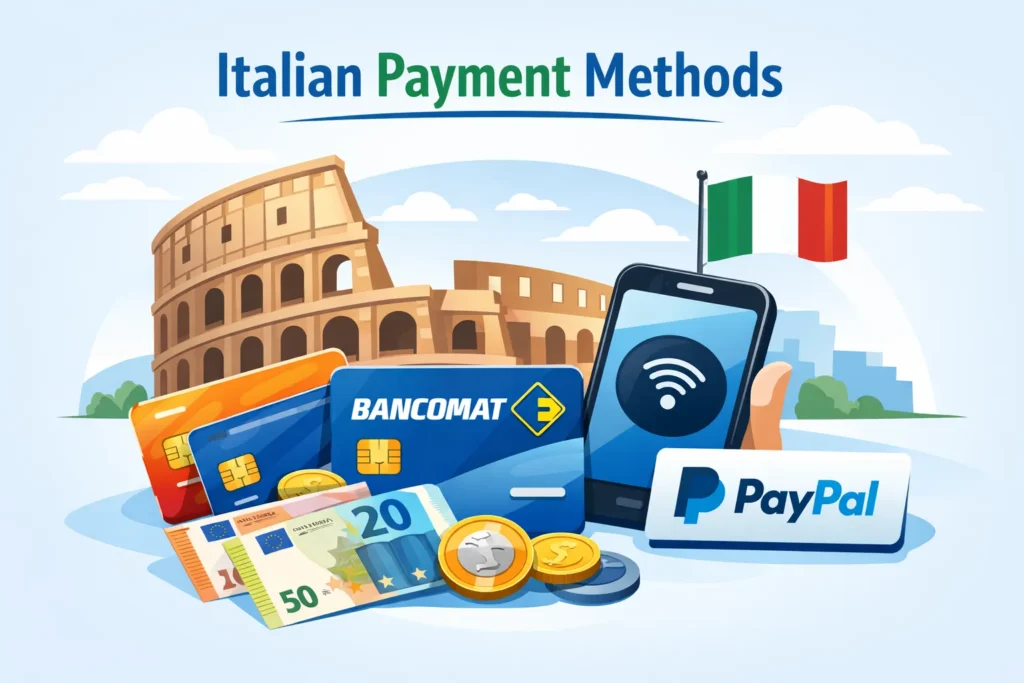
Default Shopify apps mistakes for growth, Payments works, but Italian customers expect local options:
Must-Have Payment Apps:
Satispay Integration
- Most popular Italian payment app
- Zero transaction fees for merchants
- Instant settlement
- Trusted by Italian millennials
Scalapay (Buy Now, Pay Later)
- Split payments into 3 installments
- No interest for customers
- Increases average order value by 35%
- Popular for fashion and electronics
PayPlug
- European payment processor
- Lower fees than Shopify apps for growth Payments
- Local SEO optimization payment method support
- Italian customer service
Trust Signals to Add:
- Display payment logos in header/footer
- Add “Pagamento sicuro” (secure payment) badges
- Show SSL certificate indicators
- Include “Garanzia rimborso” (money-back guarantee)
4. Reviews & Social Proof
Impact: Displaying reviews increases conversion rates by 42% on average. For Italian shoppers who value trust, reviews are non-negotiable.
Top Pick: Judge.me
Best for: Best value for money
Key Features:
- Unlimited reviews on all plans
- Photo and video reviews
- Automatic review requests
- Google Shopping integration
- Rich snippets for SEO
- Carousels and widgets
- Import from other platforms
Pricing: Free forever plan available, Premium from €15/month
Italian Setup:
- Set review request emails to the Italian language
- Time requests for 14 days after delivery (optimal for Italian post)
- Offer a 10% discount incentive for photo reviews
- Display reviews with star ratings on collection pages
- Add “Recensioni Verificate” (Verified Reviews) badge
Expected Impact: 35-50% conversion rate increase
Photo-Focused Alternative: Loox
Best for: Visual products (fashion, beauty, home decor)
Key Features:
- Gorgeous photo review galleries
- Automatic referral rewards for reviewers
- Instagram-style layouts
- Upsell in review popups
- AliExpress review import
Pricing: From €9.99/month
Why Choose This: If your products are highly visual and Instagram is a key marketing channel, Loox creates stunning social proof displays.
Enterprise Option: Yotpo
Best for: Large stores (€50,000+ monthly revenue)
Key Features:
- Reviews + loyalty + referrals + UGC
- Advanced analytics
- SMS review collection
- Influencer marketplace
- API integrations
Pricing: Free plan available, Premium from €19/month
Reviews App Comparison
| App | Free Plan | Paid From | Photo Reviews | Import | Italian | Best For | Rating |
| Judge.me | ✓ | €15/mo | ✓ | ✓ | ✓ | Best value | 4.9/5 |
| Loox | ✗ | €9.99/mo | ✓ | ✓ | ✓ | Visual brands | 4.9/5 |
| Reviews.io | ✗ | €49/mo | ✓ | ✓ | ✓ | Enterprise | 4.8/5 |
| Yotpo | ✓ | €19/mo | ✓ | ✓ | ✓ | All-in-one | 4.7/5 |
5. Upsells & Cross-Sells
Impact: Upselling increases average order value by 10-30% with minimal effort.
Cart-Level Upsells: Bold Upsell
Key Features:
- True upsells (accept without leaving cart)
- Cross-sell related products
- “Frequently bought together” bundles
- Triggered by cart value or products
- Italian language customization
Pricing: From €9.99/month
Italian Psychology Tip: Frame upsells as “Completa il tuo ordine” (Complete your order) rather than aggressive sales language.
Post-Purchase Upsells: ReConvert NEW CATEGORY
Why Critical: Thank you pages have 90%+ engagement, but most stores waste this opportunity.
Key Features:
- One-click upsells after checkout
- Thank you page customization
- Birthday collectors
- Post-purchase surveys
- Track ROI per offer
Pricing: From €4.99/month
Setup Strategy:
- Offer complementary products at a 20-30% discount
- Add “Aggiungi al tuo ordine” (Add to your order) button
- No re-entering payment info needed
- Track which offers the best conversion
Expected Impact: 10-15% of customers accept post-purchase offers, adding €2,000-€5,000 monthly revenue for average stores.
Product Bundles: Fly Bundles
Best for: Creating bundle deals and quantity discounts
Key Features:
- Build your own bundle (mix & match)
- Fixed bundles
- Volume discounts
- Bundle analytics
- Works with any theme
Pricing: From €4.99/month
Italian Bundle Ideas:
- Coffee: 3 bags + grinder
- Wine: 6-bottle case discounts
- Fashion: Outfit bundles
- Beauty: Morning + evening routine
6. Social Proof & FOMO
Why Needed: Creates urgency and demonstrates popularity. Particularly effective for Italian consumers influenced by social validation.
Sales Pop by Beeketing
Key Features:
- Recent sales notifications (“Mario from Milano just bought…”)
- Live visitor counter
- Recently viewed products
- Coupon wheel pop-up
- Smart targeting rules
Pricing: Free plan available, Premium from €29/month
FOMO by Fomo
Best for: Premium brands wanting sophisticated social proof
Key Features:
- Real-time purchase notifications
- Custom timing and positioning
- A/B testing
- Verified purchase data only
- Analytics dashboard
Pricing: From €19/month
Italian Customization:
- Show city names (Milano, Roma, Napoli) for familiarity
- Use Italian format: “Acquistato 5 minuti fa” (Purchased 5 minutes ago)
- Display low stock warnings: “Solo 3 rimasti” (Only 3 left)
Expected Impact: 5-15% conversion rate increase
7. Abandoned Cart Recovery
Reality Check: 69% of Italian shoppers abandon their carts. Recovering even 10% equals massive revenue.
PushOwl – Push Notifications
Why Effective: Web push has 10x higher click rates than email.
Key Features:
- Abandoned cart push notifications
- Back-in-stock alerts
- Price drop notifications
- Shipping updates
- Welcome automations
Pricing: Free up to 500 subscribers, from €19/month
Italian Strategy:
- Send the first notification after 30 minutes
- Use urgency: “Il tuo carrello scade tra 2 ore” (Your cart expires in 2 hours)
- Offer 5% discount in the second notification (24 hours later)
- Final reminder at 72 hours
Multi-Channel Recovery: Abandonment Protector
Key Features:
- Email + SMS + Messenger recovery
- Exit-intent popups
- Progressive discounts
- A/B testing
- ROI tracking
Pricing: From €24.95/month
Expected Recovery Rate: 8-15% of abandoned carts
Customer Experience & Retention Apps
8. Live Chat & Customer Service
Impact: Live chat increases conversions by 38% and provides instant support that Italian customers value.
Top Pick: Gorgias
Best for: Growing to enterprise stores
Key Features:
- Unified inbox (email, chat, SMS, social media)
- Shopify apps for growth, deep integration (see orders, modify, and refund in chat)
- Macros for quick Italian responses
- Performance analytics
- AI-powered automation
Pricing: From €60/month (300 tickets)
Italian Setup Essentials:
- Create Italian macros for common questions (shipping, returns, sizes)
- Set business hours for the Italian timezone (GMT+1)
- Add WhatsApp integration (critical for Italy)
- Train team on formal vs informal Italian (“Lei” vs “tu”)
Budget Option: Tidio
Best for: Small stores and startups
Key Features:
- Live chat + chatbots
- Visitor tracking
- Email integration
- Mobile apps
- Free forever plan
Pricing: Free up to 50 conversations/month, from €19/mo
WhatsApp Specialist: Chat on WhatsApp
Why Essential for Italy: WhatsApp has 85% penetration in Italy—higher than any other messaging app.
Key Features:
- WhatsApp chat button
- Pre-filled messages
- Floating button widget
- Mobile optimized
- Multiple agents
Pricing: Free
Italian Best Practice: Respond to WhatsApp inquiries within 15 minutes during Italian business hours. Italian customers expect quick, personal responses.
9. Loyalty & Rewards Programs
Critical for Growth: Repeat customers spend 67% more than new customers. Loyalty programs increase retention by 30%.
Top Pick: BON Loyalty
Best for: Best value for small to medium stores
Key Features:
- Points for purchases
- VIP tiers (Bronze, Silver, Gold)
- Referral program
- Birthday rewards
- Point expiration
- Italian language support
Pricing: Free up to 300 orders/month, Premium from €15/month
Italian Loyalty Program Setup:
Points Structure:
- 1 punto for every €1 spent
- 100 punti = €5 discount
- Sign-up bonus: 200 punti
- Birthday: 500 punti
- Review: 100 punti
- Social share: 50 punti
VIP Tiers:
- Bronze (€0-500 lifetime spend): Standard points
- Silver (€500-1,500): 1.5x points + free shipping
- Gold (€1,500+): 2x points + early access + exclusive offers
Expected Impact:
- 35% increase in repeat purchases
- 25% higher average order value from members
- 20% of customers are actively engaged in the program
Enterprise Option: LoyaltyLion
Best for: Established brands (€50,000+ monthly revenue)
Key Features:
- Advanced segmentation
- Loyalty page customization
- Klaviyo/Omnisend integration
- Detailed analytics
- Custom rewards
Pricing: From €399/month
Why Upgrade: Deep analytics showing LTV impact, cohort analysis, and custom reward types beyond points.
All-in-One: Joy Loyalty
Best for: Comprehensive loyalty features
Key Features:
- Points + VIP + Referrals
- Stamps card program
- Cashback rewards
- Wishlist
- Reviews integration
Pricing: Free plan available, from €29/month
Loyalty Apps Comparison
| App | Free Plan | Paid From | Points | Tiers | Referrals | Italian | Best For | Rating |
| BON Loyalty | ✓ (300 orders) | €15/mo | ✓ | ✓ | ✓ | ✓ | Best value | 4.9/5 |
| Smile.io | 200 orders | €49/mo | ✓ | ✓ | ✓ | ✓ | Popular | 4.8/5 |
| LoyaltyLion | ✗ | €399/mo | ✓ | ✓ | ✓ | ✓ | Enterprise | 4.7/5 |
| Joy Loyalty | ✓ | €29/mo | ✓ | ✓ | ✓ | ✓ | Feature-rich | 4.9/5 |
10. Referral Marketing
Why Essential for Italy: Word-of-mouth culture is strong. Italians trust recommendations from friends and family over advertising.
ReferralCandy
Key Features:
- Automated referral program
- Post-purchase popups
- Email and social sharing
- Fraud detection
- Analytics dashboard
Pricing: From €49/month + 3.5% commission
Italian Referral Program Example:
For Referrer: €10 credit when friend makes first purchase
For Friend: 15% discount on first order
Messaging: “Invita un amico e ricevi €
FAQs
The best Shopify apps for growth in Italy include email marketing, reviews, loyalty, upsell, and payment apps that match local customer behavior and shopping preferences.
Shopify apps help Italian e-commerce stores improve conversions, automate marketing, build customer trust, and support local payment methods, which leads to faster and more sustainable growth.
Yes, local payment apps like Satispay and Scalapay increase trust, reduce checkout friction, and improve conversion rates among Italian shoppers who prefer familiar payment options.
Yes, even small Italian stores can increase sales by using automation, abandoned cart recovery, and review apps to optimize customer journeys and improve overall store performance.
Free Shopify apps can help in the early stages, but paid apps usually provide more advanced features, better automation, and deeper analytics for long-term growth.
Most growing Shopify stores perform best with 5 to 10 well-optimized apps that focus on marketing, conversions, and customer retention rather than installing too many apps.
Some poorly optimized apps can slow down a store, but high-quality apps are built to be lightweight. Regular performance checks help keep stores fast and optimized.