
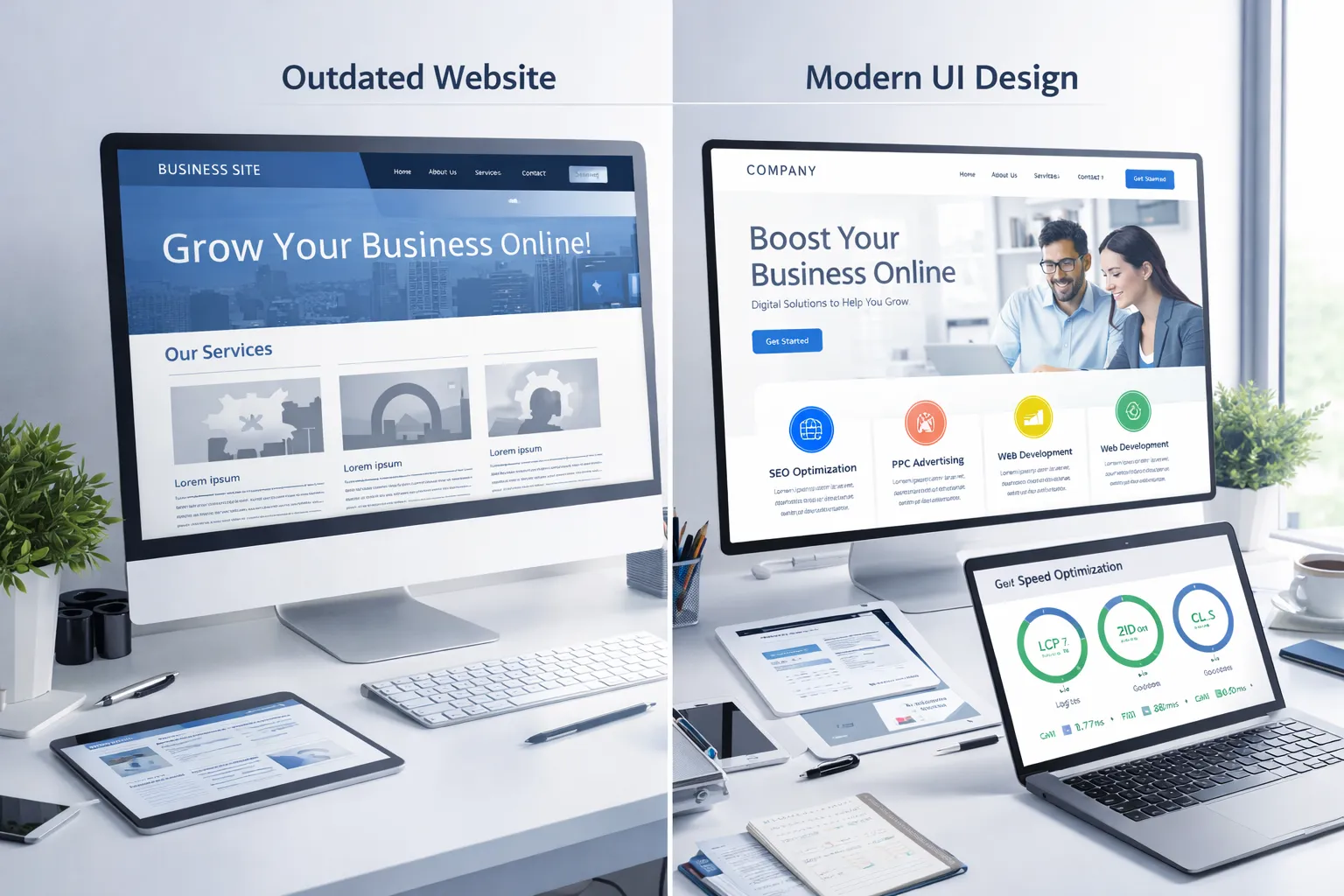
Your website is the digital face of your business.
In 2026, customers judge your brand within seconds after landing on your website. If your website looks outdated, loads slowly, or feels confusing, visitors leave immediately.
Many businesses focus on marketing but ignore the condition of their website.
Even if you invest in SEO, ads, or social media marketing, a poorly designed website can destroy conversions.
A modern website must provide:
• Fast loading speed
• Clear navigation
• Strong calls to action
• Mobile optimization
• Professional design
• Trust signals
If these elements are missing, your business may already be losing potential customers.
In this guide, we will explain the most important signs your business needs a website redesign in 2026 and how fixing these problems can dramatically increase conversions.
Why Website Redesign Matters More in 2026
The internet is more competitive than ever.
Users expect websites to load instantly and provide a smooth experience.
Google also ranks websites based on user experience signals like:
• Core Web Vitals
• Mobile usability
• Fast Page speed
• Content quality
If your website does not meet modern standards, both users and search engines will ignore it.
A website redesign is not just about changing colors or layout.
It is about improving performance, trust, and conversion rates.
Sign 1: Your Website Looks Outdated
Problem
Design trends change quickly.
A website that looked modern five years ago may now appear old and unprofessional.
Common outdated design problems include:
• Old fonts and color styles
• Cluttered layouts
• Low-quality images
• Non-responsive pages
• Flash-style elements or old animations
When visitors see an outdated website, they instantly lose trust.
They assume the business may also be outdated or unreliable.
First impressions matter online.
Most users decide within 5 seconds whether they trust your brand.
Solution
A website redesign can modernize your digital marketing presence.
A modern design should include:
• Clean layouts
• Professional typography
• White space for readability
• High-quality visuals
• Modern UI components
• Mobile-friendly structure
Modern websites focus on clarity, simplicity, and user experience.
When visitors land on a professional website, they feel confident about your brand.
Sign 2: Your Website Is Not Mobile Friendly
Problem
More than 60% of web traffic now comes from mobile devices.
If your website is difficult to use on smartphones, visitors will leave instantly.
Common mobile issues include:
• Text that is too small
• Buttons too close together
• Slow mobile loading
• Broken layouts
• Difficult navigation
Google also uses mobile-first indexing.
This means the mobile version of your website determines your search rankings.
If your mobile experience is poor, your SEO performance will suffer.
Solution
A modern website redesign ensures full mobile optimization.
Key improvements include:
• Responsive layouts
• Touch-friendly buttons
• Mobile-optimized images
• Fast loading pages
• Simple navigation menus
Mobile optimization improves both user experience and search rankings.
Sign 3: Your Website Loads Slowly
Problem
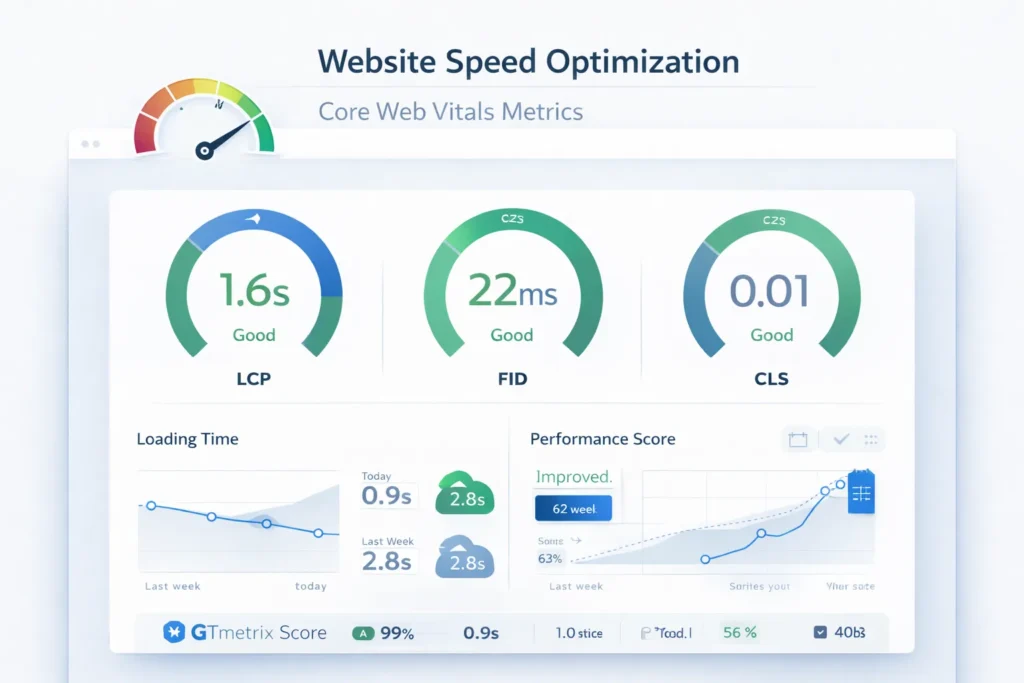
Speed is one of the biggest conversion factors.
Users expect websites to load in under 3 seconds.
If your website takes longer, visitors leave.
Slow websites usually suffer from:
• Large unoptimized images
• Poor hosting
• Too many plugins
• Heavy scripts
• Bad coding structure
Slow speed hurts:
• User experience
• Search engine rankings
• Conversion rates
Google’s Core Web Vitals also measure performance.
Websites that fail these metrics lose ranking opportunities.
Solution
A website redesign can dramatically improve performance.
Speed improvements include:
• Image compression
• Code optimization
• CDN integration
• Fast hosting servers
• Lazy loading images
A faster website keeps users engaged and increases conversions.
Sign 4: Your Website Has Poor User Experience (UX)
Problem
User experience is one of the biggest reasons websites fail.
If visitors cannot easily find information, they leave.
Common UX problems include:
• Confusing navigation
• Too many menu options
• Hidden important pages
• Poor content structure
• No clear user journey
When users feel lost, they exit the website quickly.
High bounce rates are often caused by poor UX.
Solution
A website redesign improves navigation and user flow.
Good UX design focuses on:
• Simple menu structures
• Clear page hierarchy
• Logical user journeys
• Easy access to important pages
• Clean content layouts
When users can easily navigate your website, they stay longer and explore more pages.
Sign 5: Your Website Has Weak Calls to Action (CTA)
Problem
Many websites fail because they do not guide visitors toward action.
Visitors may read content but never convert.
Common CTA problems include:
• Hidden buttons
• Weak messaging
• Too many CTAs
• Poor button placement
Without clear CTAs, users do not know what to do next.
This results in lost leads and missed sales.
Solution
A redesigned website uses strong conversion-focused CTAs.
Effective CTAs include:
• Clear messaging
• Strategic placement
• Eye-catching buttons
• Action-oriented text
Examples include:
• Get a Free Quote
• Book a Consultation
• Start Your Project
• Contact Our Experts
Clear CTAs guide users through the conversion funnel.
Sign 6: Your Website Is Not Generating Leads
Problem
Many business websites attract traffic but fail to convert visitors into customers.
This usually happens because the website lacks:
• Lead capture forms
• Clear service pages
• Conversion landing pages
• Trust signals
If your website does not generate inquiries, something is wrong with the design or structure.
Solution
A website redesign focuses on conversion optimization.
Lead generation improvements include:
• Strategic contact forms
• Service-focused landing pages
• Lead magnets
• Strong CTA placements
A well-designed website works as a 24/7 sales machine.
Sign 7: Your Website Lacks Trust Signals

Problem
Online users do not trust websites easily.
If your website lacks credibility indicators, visitors hesitate to contact you.
Common missing trust signals include:
• Customer testimonials
• Client logos
• Case studies
• Security badges
• Professional design
Without trust signals, visitors feel uncertain.
Trust directly affects conversions.
Solution
A redesigned website builds credibility using:
• Client testimonials
• Portfolio sections
• Case studies
• SSL security
• Professional branding
Trust signals reassure visitors that your business is reliable.
Sign 8: Your Website Is Hard to Update
Problem
Some websites are built on outdated systems.
Updating content becomes difficult and time-consuming.
This prevents businesses from publishing new content regularly.
Outdated CMS systems limit growth.
Solution
A modern redesign uses flexible platforms like:
• WordPress
• Shopify Development
• Headless CMS
• Modern frameworks
These platforms allow easy updates and scalability.
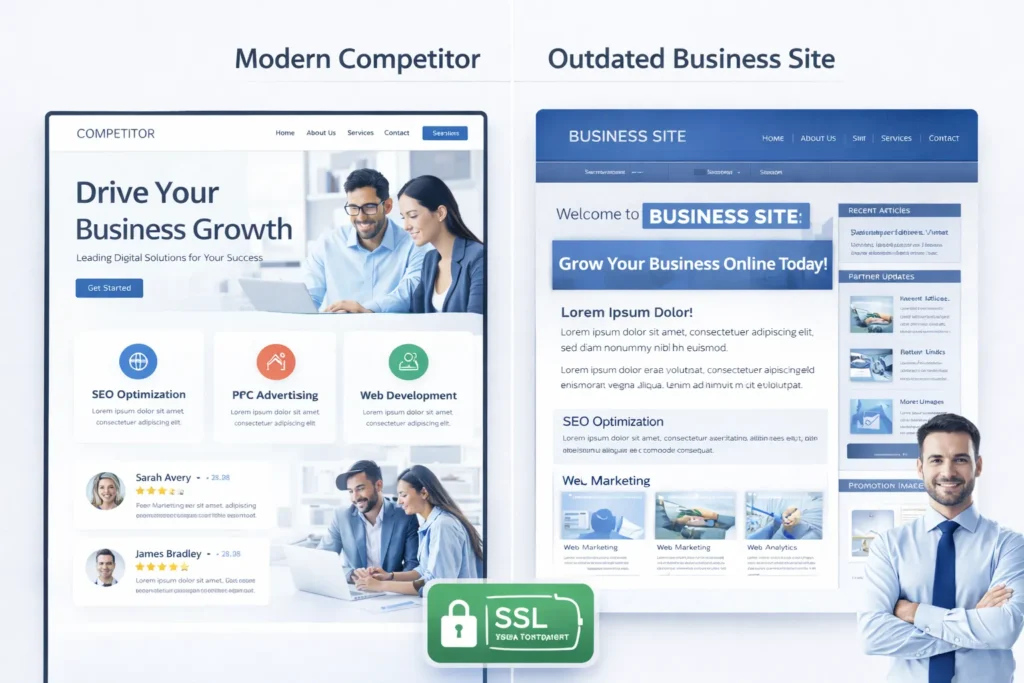
Sign 9: Your Competitors Have Better Websites
Problem
Customers compare multiple businesses before making decisions.
If your competitors have better websites, you will lose potential customers.
A competitor website with:
• Better design
• Faster speed
• Clear services
will always attract more trust.
Solution
Website redesign helps you stay competitive.
A modern website allows you to stand out in your industry.
Better design, speed, and user experience can outperform competitors.
Benefits of Website Redesign
Redesigning your website provides many benefits.
Improved benefits include:
Better user experience
Higher conversion rates
Improved SEO rankings
Stronger brand credibility
Better mobile experience
Faster website performance
A redesigned website becomes your most powerful marketing tool.
Conclusion
Your website plays a critical role in business growth.
In 2026, customers expect fast, modern, and easy-to-use websites.
If your website looks outdated, loads slowly, or fails to convert visitors, it may be time for a redesign.
Improving UX, speed, design, and trust signals can transform your website into a powerful lead generation platform.
A professional website redesign helps ensure your business stays competitive in the digital landscape.
Faqs
Most businesses should redesign their website every 3 to 5 years. Technology, design trends, and user expectations change quickly, making regular updates important for maintaining performance and credibility.
Common reasons include outdated design, slow speed, poor mobile experience, low conversion rates, weak SEO performance, and a lack of trust signals that erode customer confidence.
Yes. A redesign improves site structure, page speed, mobile usability, and user experience. These factors help search engines rank the website higher in search results.
Most professional website redesign projects take between four and twelve weeks, depending on the website size, features, content updates, and development complexity.
Yes. A redesigned website improves user experience, trust signals, and call-to-action placement, which helps convert visitors into leads and customers.
A website refresh updates design elements like colors and images, while a full redesign rebuilds the structure, layout, functionality, and performance.
A modern website should include responsive design, fast loading speed, clear navigation, strong CTAs, trust signals, SEO optimization, and secure hosting.