
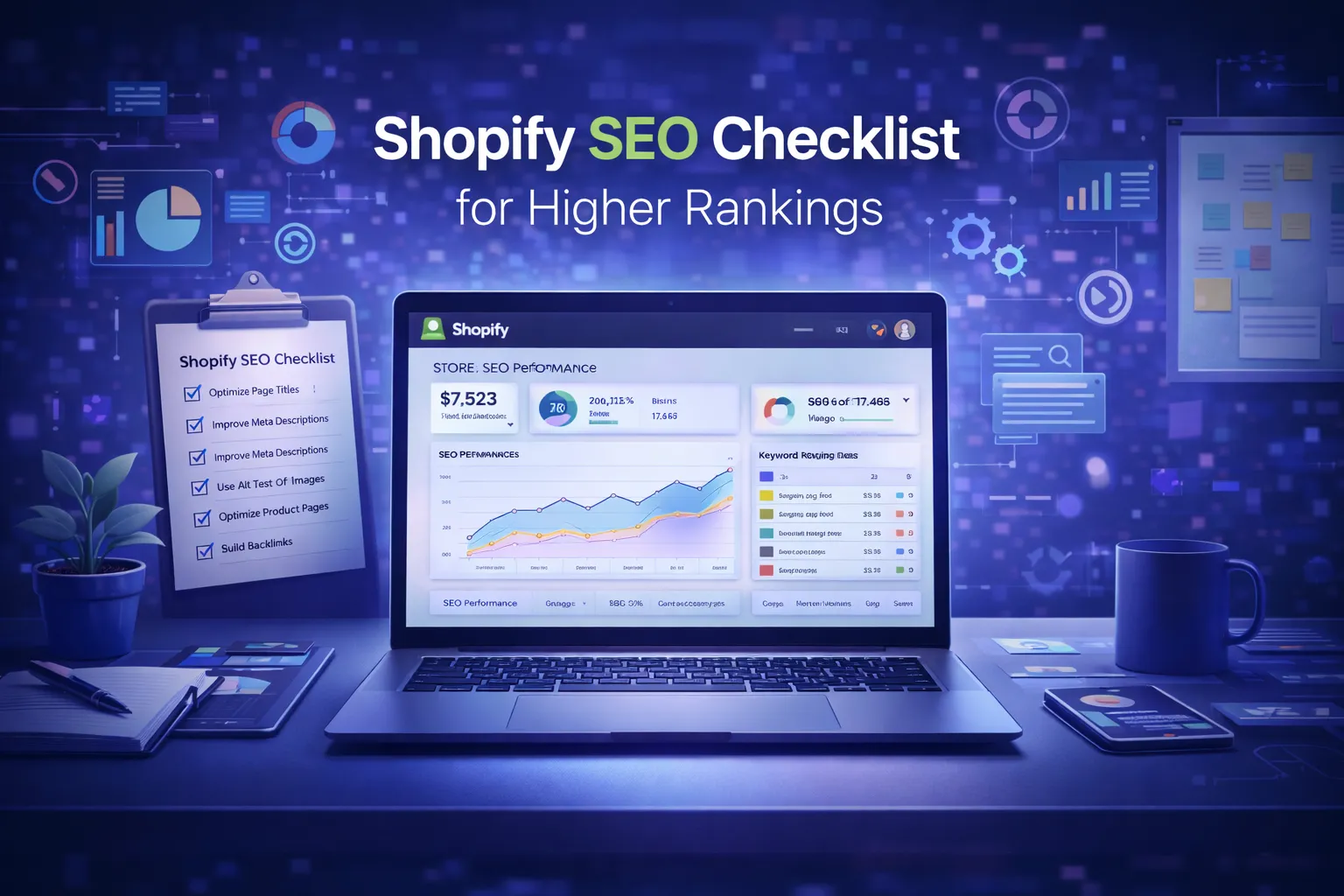
Shopify SEO Checklist to Rank Your Online Store
Running a Shopify store is exciting. You can launch a product, build a brand, and reach customers around the world.
But launching a store does not guarantee traffic or sales.
Thousands of Shopify stores compete for attention in search results. If your store does not appear on the first page of Google, customers may never discover your products.
This is where Shopify SEO becomes essential.
Search Engine Optimization helps your online store appear in search results when customers look for products like yours.
However, many store owners focus only on marketing while ignoring the SEO foundation of their store.
Common problems include:
- slow website speed
- Poor product page structure
- weak keyword optimization
- poor mobile experience
- missing meta tags
- duplicate content issues
These problems prevent Shopify stores from ranking in search engines.
A well-optimized store follows a structured Shopify SEO checklist that improves visibility, user experience, and conversions.
In this guide, we will walk through the most important SEO steps that help Shopify stores rank higher and attract more customers.
Why Shopify SEO Is Important for Online Stores
SEO helps customers find your store through search engines like Google.
When users search for products, they usually click on the first few results.
If your store ranks higher, you gain:
- more organic traffic
- higher brand visibility
- increased trust
- more sales
Unlike paid advertising, SEO continues generating traffic long after the optimization work is completed.
For Shopify store owners, SEO becomes one of the most powerful long-term digital marketing strategies.
Shopify SEO Checklist for Higher Rankings
Below is a complete checklist that helps improve rankings and store performance.
Keyword Research for Shopify SEO
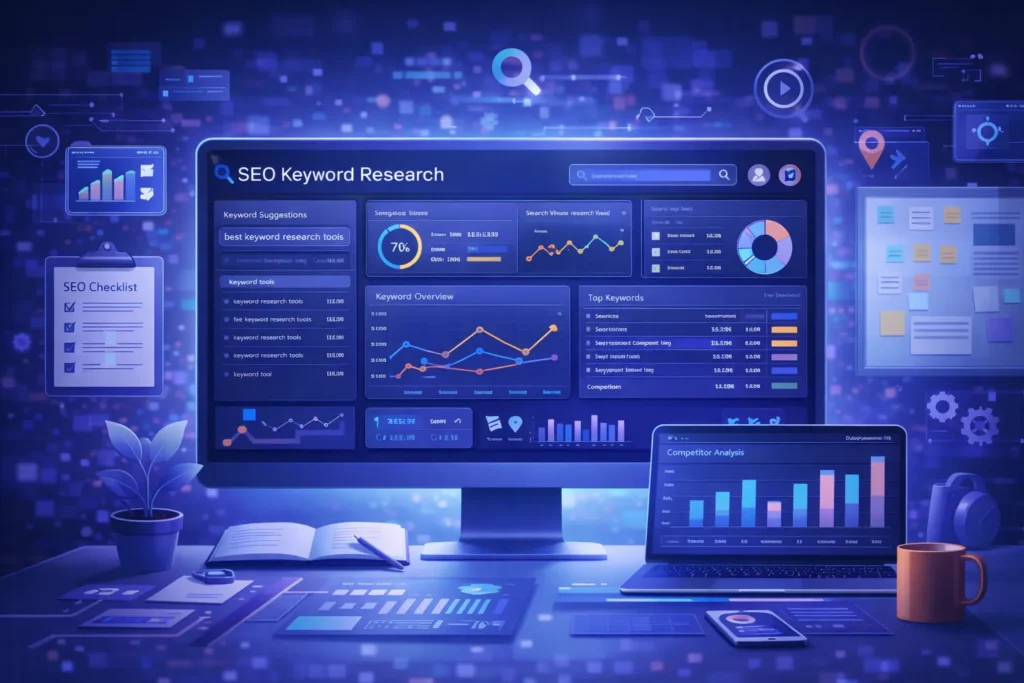
Before optimizing a store, you must understand what customers are searching for.
Keyword research helps identify the terms people use when looking for products.
Focus on three types of keywords:
Primary Keywords
These are the main product keywords, such as:
- running shoes
- wireless headphones
- organic skincare
Long-Tail Keywords
These are more specific search queries, such as:
- best running shoes for beginners
- wireless headphones with noise cancellation
Long-tail keywords usually convert better because they target specific customer intent.
Commercial Keywords
These keywords indicate buying intent.
Examples include:
- Buy wireless headphones online
- best price running shoes
Adding these keywords to product pages increases the chances of ranking.
Optimize Shopify Store Structure
A clear website structure helps both users and search engines navigate the store.
A well-organized store structure looks like this:
Homepage
→ Collection pages
→ Product pages
Example structure:
Home
→ Shoes
→ Running Shoes
→ Product Page
Avoid adding too many navigation layers.
Simple structures help search engines crawl pages easily.
Optimize Shopify Product Pages
Product pages are the most important pages for ecommerce SEO.
Each product page should include:
- keyword-optimized title
- detailed product description
- high-quality images
- structured headings
- internal links
Avoid copying product descriptions from manufacturers because duplicate content affects rankings.
Instead, write unique descriptions that explain product benefits and features.
Improve Shopify Page Speed
Website speed plays a huge role in both SEO and conversions.
Slow websites cause visitors to leave quickly.
Speed optimization steps include:
- compressing images
- Reducing heavy scripts
- using lightweight themes
- minimizing apps
Faster websites rank better in search results and provide a better user experience.
Optimize Images for SEO
Images help customers understand products, but they must also be optimized for search engines.
Important image optimization steps include:
- compress image size
- Use descriptive filenames
- Add alt text
Example:
Bad image name
IMG12345.jpg
Optimized image name
running-shoes-nike-air.jpg
Alt text example:
“black nike running shoes for men.”
These small improvements help images appear in Google image search.
Mobile Optimization for Shopify Stores
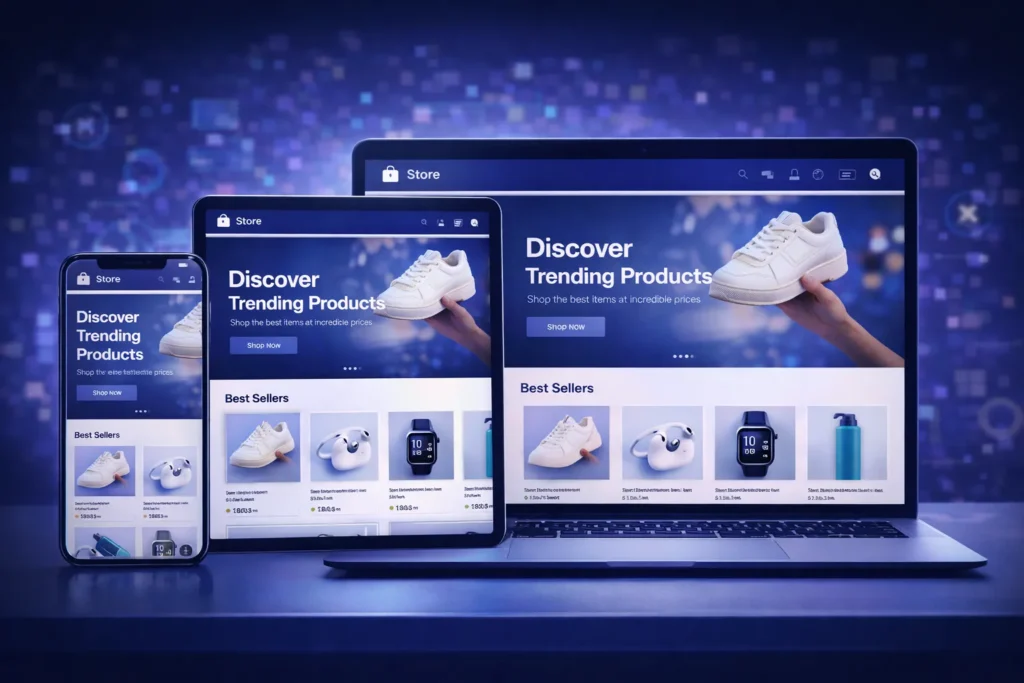
Most ecommerce traffic now comes from mobile devices.
If your Shopify development store is not mobile-friendly, users will quickly leave.
Mobile optimization includes:
- responsive design
- readable fonts
- easy navigation
- fast loading pages
Google also uses mobile-first indexing, meaning mobile performance affects rankings.
Improve Shopify On-Page SEO
On-page SEO includes elements that appear directly on the page.
Important elements include:
Title Tags
Example:
Shopify SEO Checklist for Ecommerce Stores
Meta Descriptions
Short descriptions that appear in search results.
Example:
Complete Shopify SEO checklist to improve rankings, increase traffic, and grow ecommerce sales.
Headings Structure
Use headings like:
H1
H2
H3
This helps organize content and improve readability.
Optimize Shopify URLs
Clean URLs improve both SEO and user experience.
Bad URL example:
example.com/product123?id=678
Good URL example:
example.com/running-shoes
Short and descriptive URLs perform better in search results
Internal Linking Strategy
Internal links help search engines understand website structure.
Examples include linking:
Blog posts → product pages
Homepage → collections
Product pages → related products
Internal linking improves SEO and helps users discover more products.
Add Schema Markup
Schema markup helps search engines understand page content.
For ecommerce stores, schema helps display:
- product ratings
- prices
- availability
These rich results improve click-through rates in search results.
Shopify Blog for SEO Traffic
Blogging is one of the best ways to increase organic traffic.
Blog articles help target informational keywords.
Examples:
- best running shoes for beginners
- How to choose skincare products
These articles attract users early in the buying journey.
From the blog, you can link to relevant product pages.
Improve User Experience for Better SEO
Google measures user behavior signals.
If visitors leave quickly, rankings may drop.
Improve user experience by:
- reducing page clutter
- simplifying navigation
- improving page speed
- using clear call-to-action buttons
Better UX keeps visitors engaged longer.
Build Backlinks for Shopify Stores
Backlinks remain one of the strongest ranking factors.
Backlinks are links from other websites pointing to your store.
Effective strategies include:
- guest blogging
- influencer collaborations
- PR campaigns
- product reviews
High-quality backlinks increase domain authority.
Optimize Shopify Checkout Experience
SEO brings traffic, but conversion optimization generates revenue.
Improve checkout experience by:
- Reducing checkout steps
- Adding trust badges
- offering multiple payment methods
- improving mobile checkout
A smooth checkout process increases sales.
Monitor Shopify SEO Performance
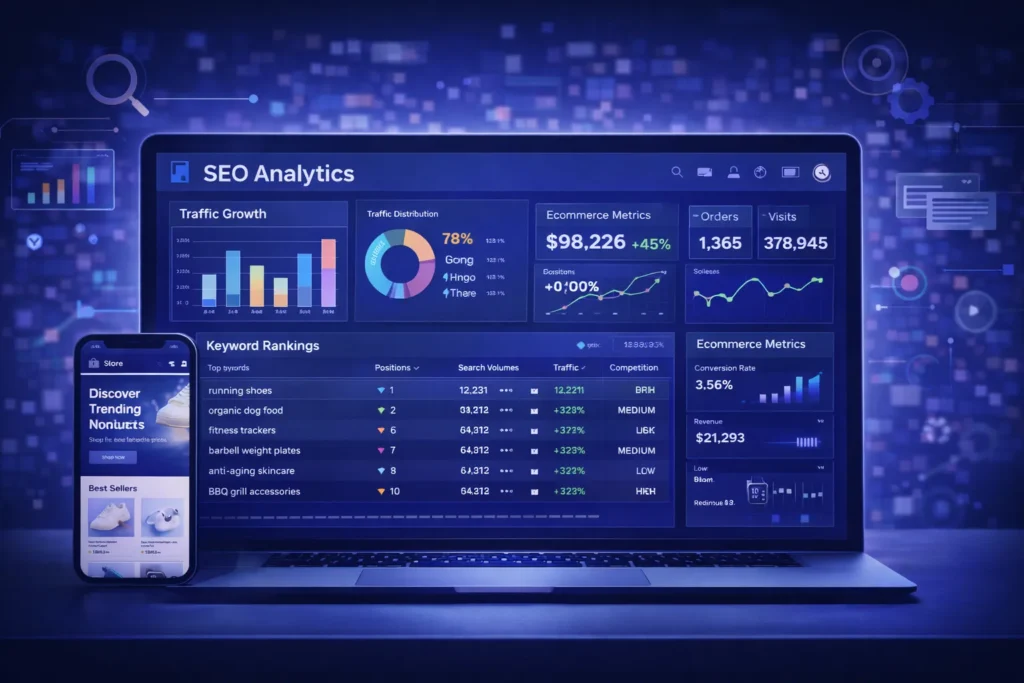
SEO is an ongoing process.
Track performance using tools such as:
- Google Search Console
- Google Analytics
- SEO tools like Ahrefs or SEMrush
Monitor:
- keyword rankings
- organic traffic
- conversion rates
Regular monitoring helps identify improvement opportunities.
Final Thoughts
Ranking a Shopify store in search engines requires a strong SEO foundation.
Without proper optimization, even the best products may remain hidden from potential customers.
Following a structured Shopify SEO checklist helps improve visibility, traffic, and conversion rate optimization.
By focusing on technical SEO, keyword optimization, user experience, and content marketing, Shopify store owners can build sustainable organic traffic.
In the competitive ecommerce landscape, SEO is not just an option — it is a necessity for long-term success.
Faqs
A Shopify SEO checklist is a step-by-step process used to optimize a Shopify store for search engines to improve rankings, traffic, and sales.
SEO helps online stores rank higher in search results, attract organic traffic, and increase sales without relying solely on paid advertising.
SEO results usually take three to six months, depending on competition, website quality, and the strength of optimization strategies.
Yes. Shopify provides built-in SEO tools such as editable meta tags, mobile optimization, sitemap generation, and clean URLs.
Yes. Blog posts help target informational keywords and attract organic traffic that can later convert into customers.
Backlinks increase website authority and help search engines trust the store, which improves ranking potential.
Hiring SEO experts can help implement advanced strategies that improve rankings, technical performance, and long-term traffic growth.