
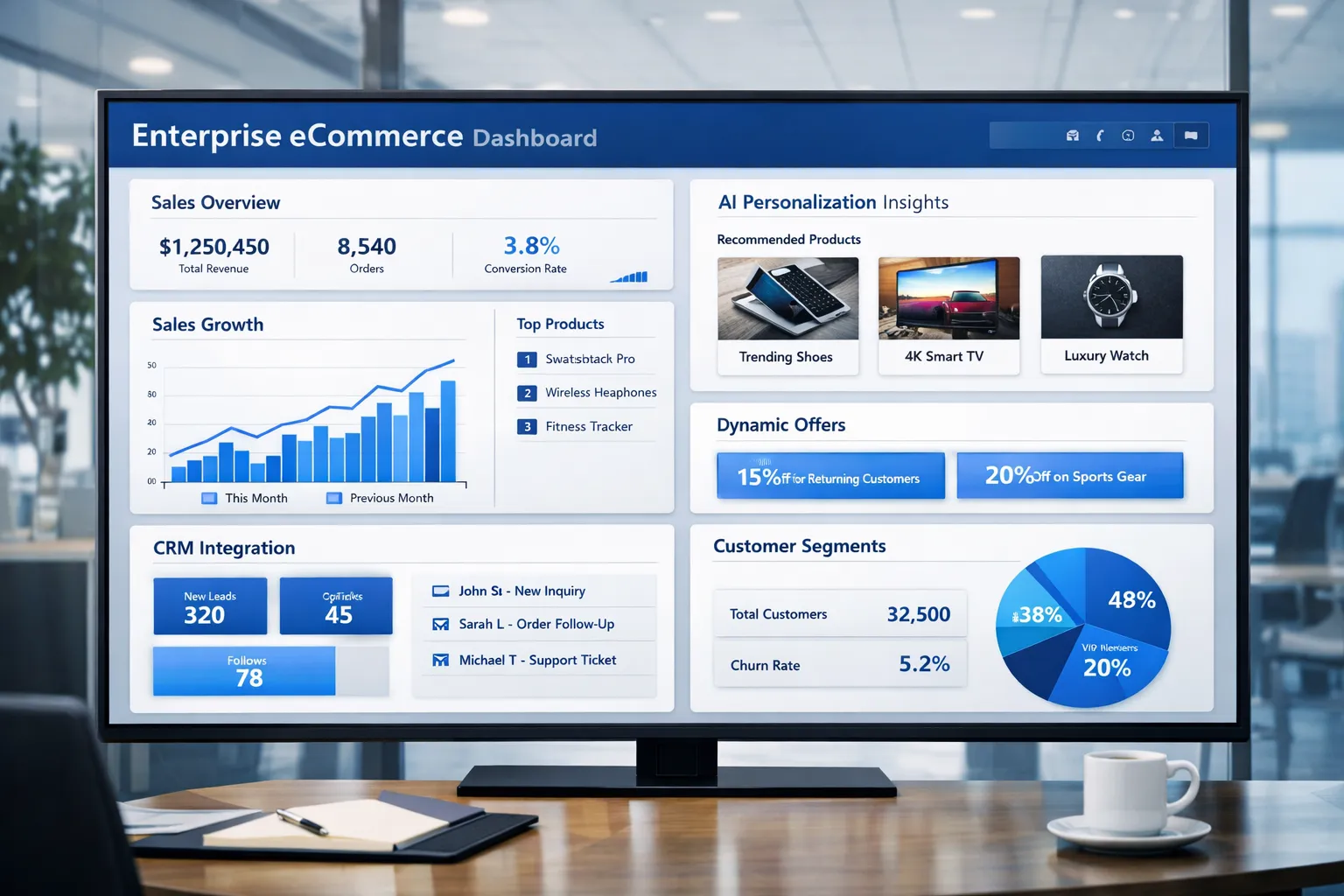
In today’s competitive US market, growing ecommerce brands need more than just basic hosting. They need scalability. Automation. Personalization.
That’s where Salesforce Commerce Cloud stands out.
It is a powerful enterprise ecommerce platform designed for large and fast-growing businesses that want to scale without limits.
Let’s break everything down in simple terms.
What Is Salesforce Commerce Cloud?
Salesforce Commerce Cloud is a cloud-based ecommerce platform built for B2B and B2C businesses.
It is part of the broader Salesforce ecosystem, which includes CRM, marketing automation, analytics, and customer service tools.
Unlike basic ecommerce hosting, this platform offers:
- Advanced personalization
- AI-driven product recommendations
- Seamless CRM integration
- Enterprise-grade security
- Global storefront management
It’s built for serious ecommerce growth.
Why US Enterprises Choose Salesforce Commerce Cloud
American businesses operate in a highly competitive environment. They need tools that:
- Handle high traffic
- Support multi-channel selling
- Integrate with marketing systems
- Scale during peak seasons
- Deliver real-time customer data
Salesforce Commerce Cloud provides all of that in one unified system.
Instead of using multiple disconnected tools, companies can manage everything from one central platform.
Download The Salesforce Commerce Cloud Checklist.
Key Features That Drive Revenue Growth
AI-Powered Personalization
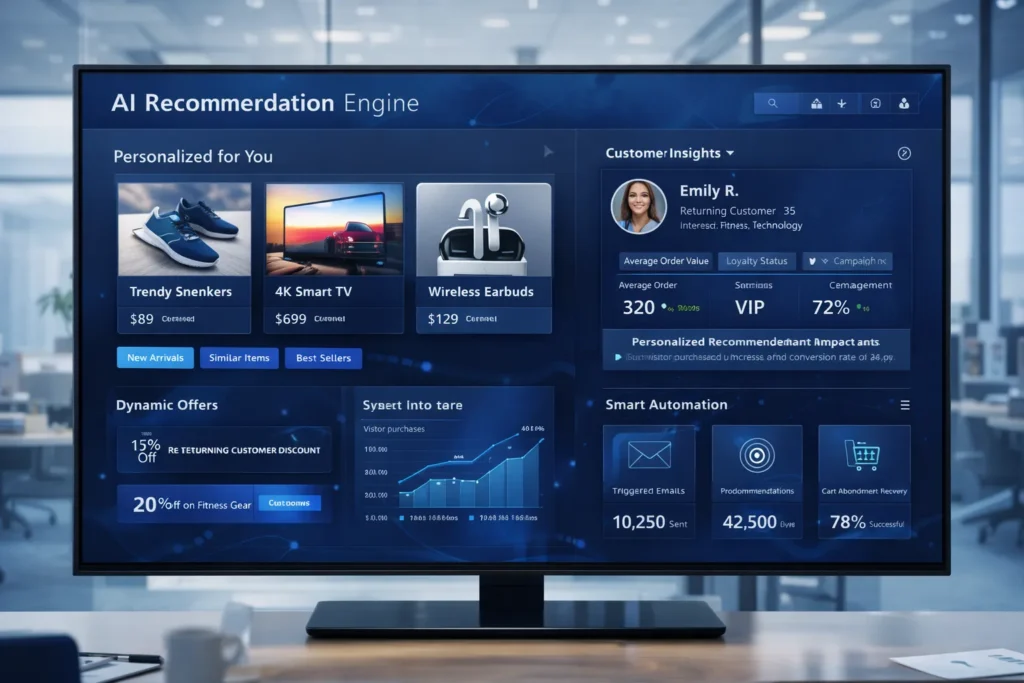
The platform uses AI to:
- Recommend products
- Predict customer behavior
- Optimize pricing
- Improve conversion rates
Personalization increases customer engagement and boosts average order value.
Seamless CRM Integration
Because it connects directly with Salesforce CRM, businesses get:
- A complete customer profile
- Real-time purchase history
- Automated marketing triggers
- Smart segmentation
This creates better customer journeys.
Omni-Channel Selling
Modern shoppers buy everywhere:
- Website
- Mobile
- Social media
- Marketplace platforms
Salesforce Commerce Cloud allows brands to manage all channels from one system.
Enterprise-Level Security
US businesses care about:
- Data protection
- Compliance
- Payment security
- Uptime reliability
This platform is designed for high performance and secure transactions.

Salesforce Commerce Cloud vs Shopify: Which Is Better?
Many businesses compare it with Shopify.
Here’s the simple difference:
| Feature | Salesforce Commerce Cloud | Shopify |
|---|---|---|
| Target Audience | Enterprise brands | Small to mid-size businesses |
| Customization | Highly advanced | Moderate |
| CRM Integration | Native & powerful | Third-party apps |
| Pricing | Premium | Affordable |
| Scalability | Enterprise-grade | Growing brands |
If you are a startup, Shopify Development may work.
If you are a large US brand planning long-term growth, Salesforce Commerce Cloud is often the better choice.
Who Should Use Salesforce Commerce Cloud?
This platform is ideal for:
- Large ecommerce retailers
- B2B distributors
- Multi-brand enterprises
- Global ecommerce companies
- Businesses doing $5M+ in annual revenue
It may not be the best fit for very small startups due to cost and complexity.
How It Improves ROI for US Businesses
Here’s how brands see measurable results:
Higher conversion rates
Better personalization
Reduced manual workload
Smarter marketing automation
Improved customer retention
Because everything is connected, marketing and sales teams make smarter decisions.
Pricing Overview
Salesforce Commerce Cloud is not a cheap solution. Pricing is usually based on:
- Gross merchandise value (GMV)
- Business size
- Custom requirements
It is positioned as a premium enterprise solution.
But for growing brands, the return on investment often justifies the cost.
Implementation: What to Expect
Enterprise implementation includes:
- Business analysis
- Platform customization
- Integration with CRM & marketing tools
- Testing and deployment
- Ongoing optimization
Working with experienced developers or certified partners is highly recommended.
Advantages of Choosing a Cloud-Based Ecommerce Platform
Why cloud matters:
- No server maintenance
- Automatic updates
- Global accessibility
- Faster performance
- High scalability
Cloud infrastructure makes growth easier and more secure.
Is Salesforce Commerce Cloud Worth It in 2026?
For enterprise US businesses — yes.
If your brand needs:
- Advanced automation
- Enterprise security
- AI-driven personalization
- Global selling capabilities
Then this platform offers serious competitive advantages.
But if you are a small business with a limited budget, simpler ecommerce solutions may be better.
Final Thoughts
Salesforce Commerce Cloud is not just another ecommerce hosting solution. It is a complete enterprise commerce ecosystem.
For US brands that want scalability, automation, and personalization at scale, it remains one of the strongest enterprise ecommerce platforms available today.
Faqs
It is designed mainly for mid-size and enterprise businesses. Small startups may find it expensive and complex compared to simpler ecommerce platforms.
Implementation can take several months, depending on customization, integrations, and business complexity.
Yes. It supports both B2B and B2C ecommerce models with advanced pricing and account management features.
Yes. It offers enterprise-level security, data protection, and compliance standards required by US companies.
Yes. It integrates seamlessly with Salesforce Marketing Cloud and CRM tools for unified marketing automation.
Absolutely. It is built to handle high traffic, global sales, and growing product catalogs.
Retail, fashion, electronics, manufacturing, and large B2B distributors commonly use this platform.