
In today’s digital world, getting traffic is no longer the biggest challenge. Many businesses already have visitors coming to their websites through ads, social media, or referrals. The real problem is turning those visitors into paying customers.
This is where most businesses struggle.
They invest in marketing, but their sales do not grow. Their website looks fine, but conversions remain low. The issue is not just visibility — it is strategy.
Search Engine Optimization (SEO) is not only about ranking higher on search engines. When done correctly, SEO becomes a powerful system that brings qualified traffic, builds trust, and increases sales consistently.
If your website is not generating results, this guide will show you exactly how SEO services can fix that.
Why Most Websites Fail to Convert Traffic into Sales
Many businesses think that more traffic automatically means more revenue. But in reality, traffic without a strategy leads to wasted opportunities.
Most websites fail because they focus only on attracting visitors instead of converting them.
Common problems include:
- Poor user experience (UX)
- Slow loading speed
- Confusing navigation
- Weak call-to-actions (CTA)
- Lack of trust signals
- Irrelevant or low-quality content
Even if your website ranks on search engines, these issues can silently kill your conversions.
SEO services solve this by optimizing not just rankings, but the entire user journey.
What Are SEO Services and How Do They Work?
SEO services are a combination of strategies designed to improve your website’s visibility on search engines while also improving user experience and conversions.
Instead of chasing random traffic, SEO focuses on bringing the right audience — people who are already searching for your products or services.
A complete SEO strategy includes:
- Keyword research targeting buyer intent
- On-page optimization for content and structure
- Technical SEO for speed and performance
- Content marketing for authority building
- Link building for credibility
- Conversion optimization for better sales
When all these elements work together, your website becomes a sales engine instead of just an online presence.
How SEO Services Increase Sales (Step-by-Step)
SEO works best when it is aligned with business goals. It is not just about ranking — it is about converting.
1. Attracting High-Intent Traffic
Not all traffic is valuable. SEO focuses on targeting users who are actively searching for solutions.
For example, someone searching “buy coffee online” is much more likely to convert than someone searching “types of coffee.”
This means:
- Better quality visitors
- Higher conversion chances
- Lower bounce rates
2. Improving User Experience (UX)
User experience plays a huge role in conversions. If visitors find your website difficult to use, they will leave immediately.
SEO improves UX by:
- Optimizing page speed
- Making navigation simple
- Ensuring mobile responsiveness
- Structuring content for readability
A smooth experience keeps users engaged and increases the chances of conversion.
3. Building Trust and Credibility
People only buy from brands they trust. SEO helps build that trust over time.
Key trust factors include:
- High search engine rankings
- Quality content
- Secure website (HTTPS)
- Positive user signals
When users see your website consistently on search results, they naturally trust your brand more.
4. Optimizing Content for Conversions
Content is not just for information — it should guide users toward action.
SEO services optimize content by:
- Using clear and persuasive messaging
- Adding strong CTAs
- Solving real user problems
- Structuring content for easy reading
This turns visitors into leads and leads into customers.
5. Enhancing Call-to-Actions (CTA)
Many websites lose sales because their CTAs are weak or unclear.
Effective SEO-driven CTAs:
- Are visible and easy to find
- Use action-based language
- Match user intent
- Appear at the right time
Simple changes like “Get Started Today” instead of “Submit” can significantly increase conversions.
The Role of Technical SEO in Sales Growth
Technical SEO ensures that your website performs well behind the scenes.
Without it, even the best content will fail.
Important technical factors include:
- Fast loading speed
- Mobile speed optimization
- Clean URL structure
- Proper indexing
- Fixing broken links
A technically strong website creates a smooth experience, which directly impacts sales.
Why SEO Is Better Than Paid Ads for Long-Term Sales
Paid ads can bring quick traffic, but they stop the moment you stop spending.
SEO, on the other hand, builds long-term growth.
Key advantages of SEO:
- Sustainable traffic over time
- Higher trust compared to ads
- Lower cost in the long run
- Better ROI
SEO acts like an asset that keeps generating results even after the initial investment.
UX, Design & Trust Signals That Boost Conversions
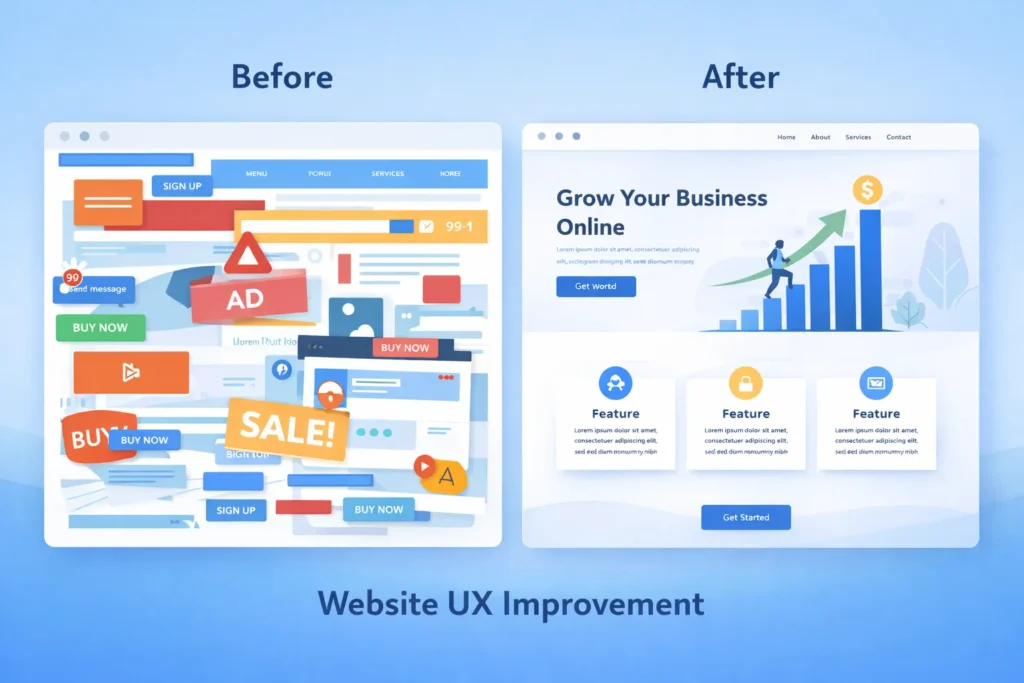
SEO is deeply connected with design and trust.
A well-optimized website includes:
- Clean and modern design
- Easy navigation
- Clear product/service pages
- Testimonials and reviews
- Secure checkout process
These elements make users feel confident, which leads to more sales.
Common SEO Mistakes That Hurt Sales
Even small mistakes can impact your performance.
Avoid these common issues:
- Targeting the wrong keywords
- Ignoring mobile users
- Slow website speed
- Thin or duplicate content
- Missing CTAs
Fixing these problems can immediately improve your results.
How to Choose the Right SEO Service Provider
Choosing the right SEO partner is critical.
Look for:
- Proven results and case studies
- Transparent strategies
- Clear communication
- Focus on conversions (not just rankings)
The right agency will focus on business growth, not just traffic numbers.
Conclusion
Increasing sales is not about getting more visitors — it is about getting the right visitors and converting them effectively.
SEO services provide a complete system that improves visibility, builds trust, enhances user experience, and drives conversions.
If your website is not generating results, SEO is not optional anymore — it is essential.
Faqs
SEO usually takes 3–6 months to show noticeable results, but it builds long-term growth and consistent sales over time.
SEO cannot guarantee sales, but it significantly increases the chances by targeting the right audience and improving conversions.
SEO is better for long-term growth, while paid ads are useful for short-term results. Both can work together.
Yes, SEO helps small businesses compete with larger brands by targeting specific audiences and niches.
Costs vary depending on strategy and competition, but SEO provides a strong ROI over time.
Yes, SEO includes UX improvements that enhance design, usability, and overall user experience.
Targeting high-intent keywords and optimizing conversions are the most important factors.