
In today’s rapidly evolving digital landscape, your website isn’t just an online brochure—it’s your digital headquarters, your 24/7 salesperson, and your primary brand touchpoint.
Yet, statistics reveal a harsh reality: the average website lifespan is only 2.66 years before requiring a complete rebuild. This constant cycle of redesigns costs businesses an average of $15,000–$50,000 every few years, draining resources that could fuel growth instead of maintenance.
Why Future-Proofing Is No Longer Optional
- 94% of first impressions relate directly to web design
- 53% of mobile visitors abandon sites taking longer than 3 seconds to load
- 43% of cyberattacks target small businesses, often via outdated websites
- 75% of users judge credibility based on website design alone
- Google Core Web Vitals have directly impacted rankings since 2021
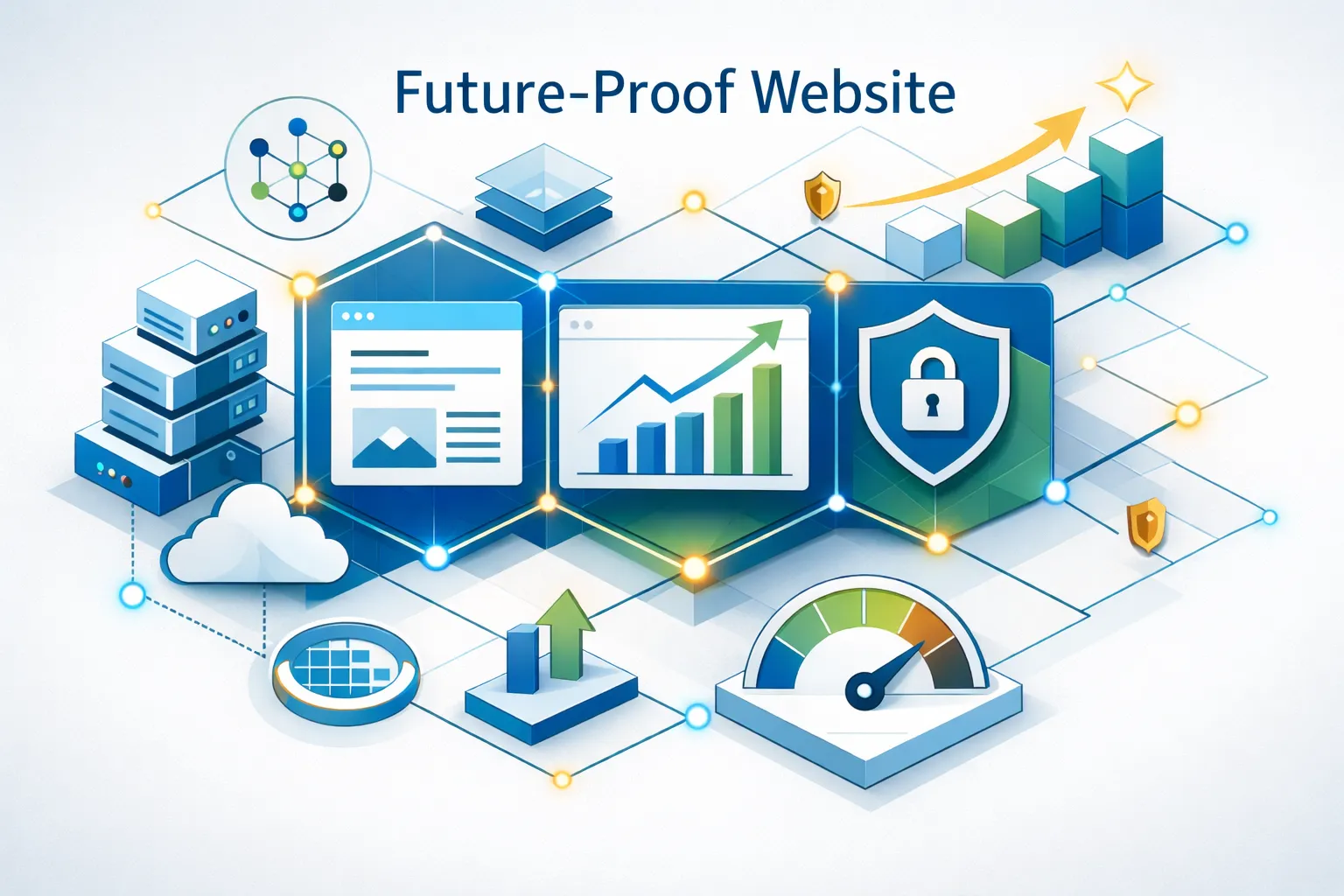
A future-proof website delivers more than aesthetics—it ensures performance, security, adaptability, and excellent UX regardless of device or technology changes.
Understanding Future-Proof Website Principles
The Three Pillars of Website Longevity
1. Flexibility: Evolving Without Rebuilding
A flexible website adapts without structural overhauls.
Key elements:
- Modular architecture
- Extensible frameworks
- Content-agnostic layouts
- API-ready infrastructure
Example: A blog that later adds video, podcasts, quizzes, and downloads—without redesigning.
2. Scalability: Growing Without Performance Loss
Scalability ensures stability during traffic spikes.
Key components:
- Horizontal server scaling
- Optimized databases
- Smart caching layers
- Global CDN delivery
Insight: Viral traffic (10,000+ users/hour) should never crash your site.
3. Maintainability: Easy Long-Term Management
Maintainability determines how easily your site stays updated and secure.
Essentials:
- Clean, documented code
- Automated backups
- Update-safe architecture
- Simple content workflows
60% of websites are abandoned due to maintenance complexity.
Additional Critical Principles
Adaptability to Emerging Technologies
Your site must support:
- New devices (foldables, wearables)
- Voice, AR/VR, gesture-based input
- Evolving web standards
- Changing search behavior
Performance as a Foundation
- 1s delay → 16% lower satisfaction
- 2s delay → 103% higher bounce rate
- Speed = UX + SEO + Conversions
Security by Design
Future-proof security includes:
- Preventive protection
- Regular audits
- GDPR/CCPA readiness
- Encryption and secure hosting
Cost Comparison: Traditional vs Future-Proof
Traditional Approach
- Initial build: $10,000
- Rebuilds: $35,000+
- 10-year total: $45,000+
Future-Proof Approach
- Initial build: $18,000
- Updates: $15,000
- 10-year total: $33,000
Result: Lower cost + better performance + preserved SEO equity.
Technology Foundation & Architecture
Choosing the Right CMS
Traditional CMS (WordPress)
Strengths:
- 43% global usage
- Massive plugin ecosystem
- SEO-friendly
- Highly customizable
Best for: Blogs, SMB sites, eCommerce, memberships
Headless CMS
Top platforms:
- Strapi
- Contentful
- Sanity
- Hygraph
Benefits:
- Omnichannel delivery
- Frontend freedom
- Better performance
- Reduced attack surface
Best for: High-performance, multi-platform experiences
Hybrid Solutions
- Headless WordPress + Next.js
- Webflow
- Builder.io
Modern Architecture Patterns
JAMstack Architecture
Benefits:
- Lightning-fast performance
- Improved security
- Unlimited scalability
Tools: Next.js, Astro, Gatsby, Netlify, Vercel
API-First Architecture
- Backend independent of frontend
- Easier integrations
- Faster feature expansion
Serverless & Edge Computing
Advantages:
- Auto-scaling
- Pay-per-use
- Reduced latency
Providers: Cloudflare Workers, AWS Lambda, Vercel Edge
Progressive Web Apps (PWAs)
Why PWAs Matter
- Offline access
- App-like UX
- No app store dependency
- SEO visibility
Results:
- Pinterest: +60% engagement
- Alibaba: +76% Conversion Rate Optimization
Performance Optimization Mastery
Core Web Vitals Explained
Largest Contentful Paint (LCP)
Target: ≤ 2.5 seconds
Fixes:
- CDN usage
- Image optimization
- Critical CSS
Interaction to Next Paint (INP)
Target: ≤ 200ms
Fixes:
- Reduce JS execution
- Delay third-party scripts
- Code splitting
Cumulative Layout Shift (CLS)
Target: ≤ 0.1
Fixes:
- Set image dimensions
- Reserve ad space
- Font optimization
Image & Media Optimization
- Use WebP / AVIF
- Responsive images
- Lazy loading
- CDN delivery
Images account for 50–70% of page weight.
Mobile-First Design Strategy
Why Mobile-First Matters
- 58.67% of global traffic is mobile
- Google uses mobile-first indexing
- 53% abandon slow mobile sites
Mobile UX Best Practices
Content Prioritization
- Essential content first
- Progressive disclosure
Touch-Friendly Design
- 48x48px tap targets
- Clear spacing
Mobile Typography
- Min 16px font size
- WCAG contrast ratios
SEO for Long-Term Success
Technical SEO Essentials
- Semantic HTML
- Clean URL structure
- Internal linking
- Canonical tags
- XML sitemaps
Voice Search Optimization
- Conversational queries
- FAQ-style answers
- Featured snippet targeting
Structured Data
Use schema for:
- Organization
- Products
- FAQs
- Breadcrumbs
Web Accessibility Compliance
Why Accessibility Matters
- Legal protection
- 1 in 4 users has a disability
- Better SEO & UX
WCAG 2.1 AA Guidelines
Key Principles (POUR)
- Perceivable
- Operable
- Understandable
- Robust
Accessibility Best Practices
- Keyboard navigation
- Screen reader support
- Proper contrast
- Alt text
- Accessible forms
- Captions & transcripts
Security & Reliability Framework
Essential Security Layers
HTTPS & SSL
- Encrypt data
- Improve trust & SEO
Web Application Firewall (WAF)
Protects against:
- SQL injection
- XSS
- CSRF
- DDoS
Final Thoughts
Future-proofing isn’t about predicting the future—it’s about building systems that adapt to it. A flexible, fast, secure, and accessible Website Development protects your investment and positions your brand for long-term digital success.
Faqs
Initial costs are higher, but 5-year savings reach 40–60%.
Yes—start with performance, accessibility, and modular refactoring.
Clean, modular architecture.
Quarterly performance, biannual security, and annual full reviews.
No. Stability and support matter more than novelty.
Yes. Start with performance, mobile UX, and security.