

Many businesses publish blogs every week. Traffic comes. Rankings improve. But clients? Leads? Sales? Nothing happens.
This is one of the most common SEO problems today: blogs not converting into leads.
You are not alone if your blog gets visitors but no inquiries. Most blogs fail not because of traffic — but because of conversion strategy gaps.
In this guide, we will break down:
- Why blogs not converting into leads is a growing issue
- Informational content issues that kill conversions
- UX and design mistakes
- CTA failures
- Trust gaps
- Strategy fixes that actually work
- How to turn blog readers into paying clients
If your goal is business growth — not just pageviews — this guide is for you.
Why Are Blogs Not Converting Into Leads Today?
Most blogs are written only for search engines — not buyers.
They answer questions but never guide readers toward action.
Common reality:
- Blog ranks
- User reads
- User leaves
- No lead captured
That’s the core reason blogs not converting into leads keeps happening.
Search traffic ≠ buyer intent automatically.
Without conversion structure, your blog becomes a free information library — not a lead engine.
What Happens When Content Is Only Informational?
Informational content issues are one of the biggest causes behind blogs not converting into leads.
Writers focus on:
- Definitions
- General tips
- Surface knowledge
- Broad advice
But they ignore:
- Buyer journey stage
- Decision triggers
- Pain point depth
- Solution positioning
- Next step guidance
Result: Reader learns — but never feels urgency to contact you.
Good content educates.
Great content converts.
Problem #1 — No Conversion Goal Defined
Many blogs are written without a business objective.
Ask this question:
What should the reader do after reading this blog?
If the answer is unclear — conversion will never happen.
Examples of missing goals:
- No service mention
- No offer
- No next step
- No CTA path
- No funnel alignment
This is a major reason blogs not converting into leads.
Solution
Define one clear goal per blog:
- Book consultation
- Request audit
- Contact SEO Services team
- Download checklist
- Get proposal
Every section should move toward that goal.
Problem #2 — Weak or Missing CTA Strategy
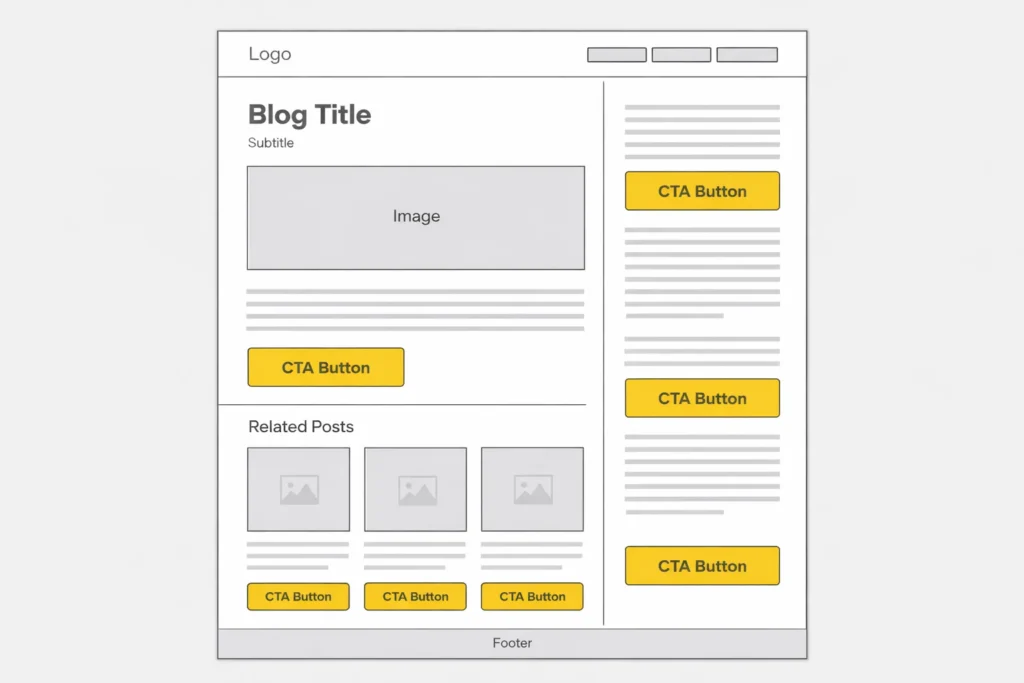
Many blogs include CTAs — but they are weak.
Bad CTAs:
- Contact us
- Learn more
- Click here
- Read more blogs
These don’t create action.
Readers need contextual CTAs tied to their problem.
Better CTA Examples
- Get a free SEO content audit
- Fix your conversion gaps with our SEO Services
- Talk to a conversion strategist today
- Download the blog conversion checklist
- Book your lead growth session
CTAs must be:
- Visible
- Relevant
- Problem-focused
- Benefit-driven
Without strong CTAs, blogs not converting into leads will continue.
Problem #3 — No Trust Signals in Content
People don’t buy from strangers.
Trust is required before conversion.
Most blogs lack:
- Case studies
- Results data
- Testimonials
- Expert positioning
- Authority proof
- Process transparency
Without trust, users leave — even if content is good.
Add Trust Builders
- Client success examples
- Performance stats
- Before/after results
- Expert quotes
- Method frameworks
- Industry experience mentions
Trust converts readers into buyers.
Problem #4 — Content Does Not Target Commercial Intent
Search intent matters.
If you target only early-stage queries — you attract researchers, not buyers.
Example:
“How does SEO work” → informational
“Best SEO services provider” → commercial
Many cases of blogs not converting into leads happen because keyword intent is wrong.
Fix Intent Alignment
Blend informational + commercial:
- Problem + solution
- Education + service path
- Insight + offer
Your blog should answer — and sell the next step.
Problem #5 — Poor UX Kills Conversion

Even good content fails with bad UX.
Common UX issues:
- Hard to read
- No spacing
- Long paragraphs
- No structure
- No visual hierarchy
- No CTA placement
- No scroll triggers
Users don’t read — they scan.
UX Fixes
- Short paragraphs
- Headings every few lines
- Bullet points
- Highlighted insights
- CTA blocks
- Visual breaks
- Sticky contact button
Better UX = higher conversion chance.
Problem #6 — No Funnel Positioning
Blogs often sit outside the sales funnel.
There is no path from:
Blog → Offer → Service → Lead
This disconnect causes blogs not converting into leads.
Funnel Structure Example
Top of Blog → Problem education
Middle → Strategy insight
Lower → Solution path
End → Service CTA (SEO Services)
Every blog should connect to a service page naturally.
Problem #7 — No Internal Linking to Services
Internal links guide users deeper.
Without internal links — readers exit.
You must connect blogs to:
SEO Services
But not randomly — contextually.
Example:
“If your content is ranking but not converting, professional SEO Services can optimize your funnel.”
That feels natural — not salesy.
Problem #8 — No Lead Magnets
Readers often need a value exchange before giving contact info.
Blogs not converting into leads often lack:
- Free audits
- Checklists
- Templates
- Tools
- Strategy guides
Add Lead Magnets
Offer something useful:
- SEO checklist
- Content audit template
- Conversion scoring sheet
- CTA optimization guide
Lead magnets increase Conversion Rate Optimization massively.
Problem #9 — Content Sounds Generic
Generic content doesn’t build authority.
If your blog sounds like every other blog — no one trusts you.
Informational content issues often include:
- Rewritten basics
- No depth
- No unique angle
- No expert insight
Add Expert Positioning
Include:
- Frameworks
- Models
- Step systems
- Strategy thinking
- Industry observations
Be the guide — not the repeater.
Problem #10 — No Emotional Trigger
Conversion requires emotion + logic.
Most blogs use only logic.
Add:
- Pain description
- Risk exposure
- Opportunity gap
- Loss cost
- Growth potential
Emotion drives action.
Problem #11 — No Conversion Tracking
Many businesses don’t measure:
- Scroll depth
- CTA clicks
- Lead form views
- Exit points
Without tracking — you can’t fix blogs not converting into leads.
Track:
- CTA clicks
- Form starts
- Time on page
- Heatmaps
- Drop-off zones
Data guides improvement.
Content Strategy Framework That Converts
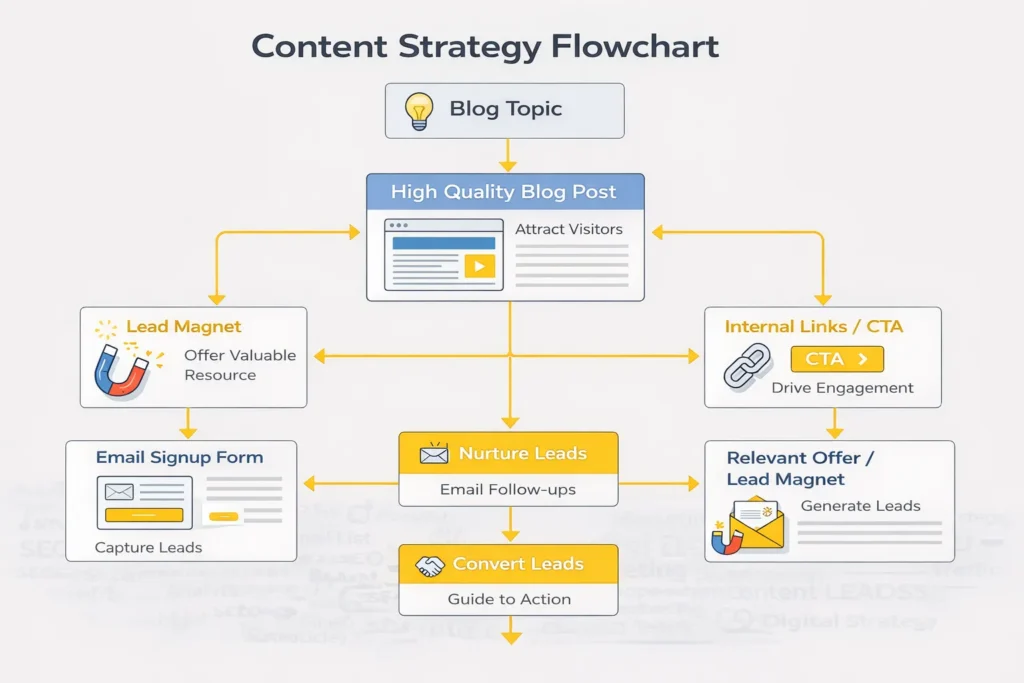
Use this simple conversion blog structure:
- Problem headline
- Pain explanation
- Mistake breakdown
- Cost of ignoring
- Strategic insight
- Solution options
- Expert positioning
- Service bridge
- Strong CTA
This turns blogs into lead engines.
How SEO Services Help Fix Blog Conversion Problems
Professional SEO Services don’t just rank pages.
They improve:
- Intent mapping
- Conversion structure
- CTA strategy
- Funnel design
- Trust signals
- UX optimization
- Content positioning
Ranking brings traffic.
Strategy brings leads.
Key Takeaways — Why Blogs Are Not Converting Into Leads
Blogs fail when they:
- Only inform
- Don’t guide
- Don’t build trust
- Ignore UX
- Lack CTAs
- Miss funnel connection
- Avoid commercial intent
Fix these — and your blog becomes a conversion tool.
Conclusion
If your blogs not converting into leads, the issue is not traffic — it is strategy.
Modern blogging is not about writing more.
It is about guiding readers toward decisions.
Fix:
- Intent
- UX
- CTA
- Trust
- Funnel flow
- Offer positioning
Turn content into client acquisition — not just pageviews.
If you want, next I can convert this into pillar + cluster blog structure for your full SEO content system.
Faqs
Because they focus only on information, not conversion strategy. Missing CTAs, weak trust signals, poor UX, and no funnel alignment prevent readers from taking action.
Yes. Traffic without intent targeting and conversion structure often produces readers, not buyers. Ranking does not automatically create qualified business leads.
Content that teaches but never guides next steps. Education without action direction causes reader drop-off and zero conversion.
At least 3–5 contextual CTAs placed naturally across the blog — intro, mid-content, and ending — aligned with reader problem stage.
Yes. Contextual internal links to SEO Services or solution pages guide readers toward offers and increase lead chances.
Strongly. Poor readability and layout reduce engagement and action. Good UX increases trust and CTA interaction.
Not fully, but it should include a commercial bridge. Blend helpful content with solution direction.